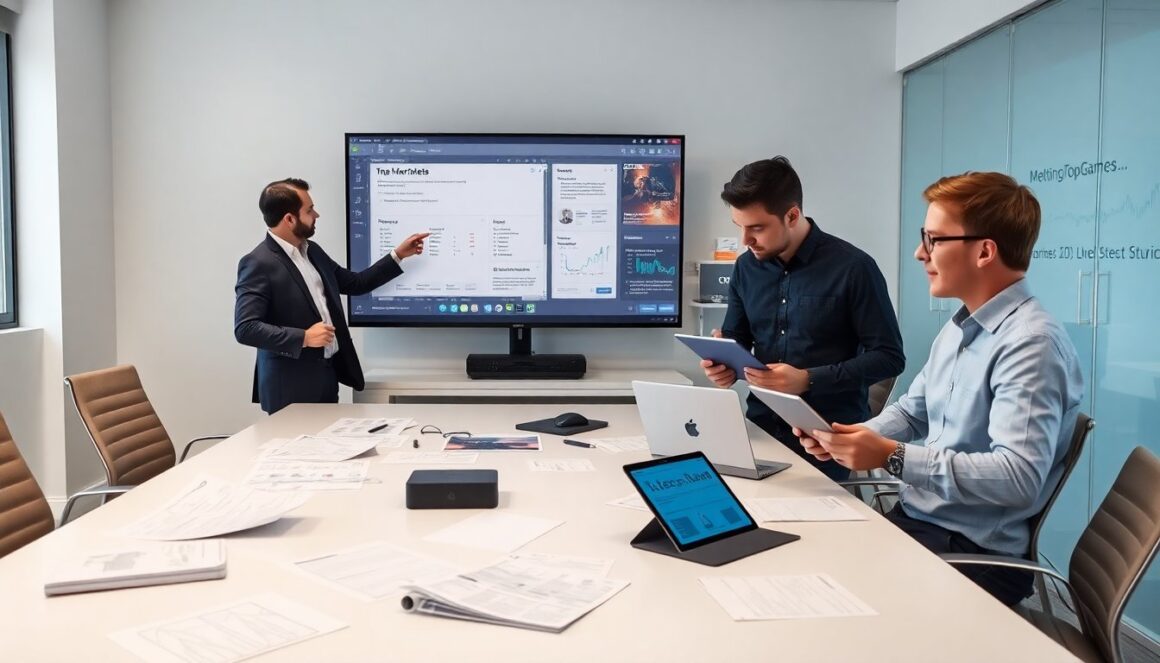
meltingtopgames architects of immersive worlds leads an approach that centers players. The studio crafts games that focus on clear goals, tight feedback, and emotional beats. The team favors systems that reveal options instead of forcing them. This short intro sets the stage for a look at who they are and how they design immersion in 2026.
Key Takeaways
- MeltingTopGames prioritizes player-centered design by focusing on clear goals, tight feedback, and meaningful emotional beats to create immersive worlds.
- The studio uses iterative prototyping and player testing as core methods to refine game systems and measure immersion through clarity, weight, and consequence.
- Their modular tools enable non-programmers like writers and designers to quickly create and adjust content, speeding up iteration and preserving creative intent.
- MeltingTopGames emphasizes visible rules and options within systems, promoting emergent gameplay and player agency without forcing choices.
- Regular cross-discipline reviews and public postmortems build transparency and improve design by incorporating continuous player feedback and measurable metrics.
- Small, empowered teams with fast feedback loops ensure alignment with player needs and efficient development of immersive experiences.
Who MeltingTopGames Is And Their Most Influential Projects
MeltingTopGames started as a small group of designers and engineers who loved player-driven stories. The studio uses iterative prototyping and player tests to refine ideas. In 2020 they released a breakout title that mixed open exploration with reactive NPCs. That project won attention for its clear player goals and emergent moments.
They then expanded into multiplayer experiences that emphasize shared discovery. The studio released a co-op title in 2023 that used simple systems to create deep social gameplay. Players praised the pacing, the low barrier to entry, and the meaningful choices. Reviewers noted the studio’s consistent focus on player experience over flashy tech.
In 2025 MeltingTopGames launched a narrative sandbox that let players edit story beats in real time. That project solidified their reputation as pragmatic innovators. The studio kept teams small and cross-functional. Designers, writers, and engineers worked together from early prototypes. This habit reduced translation loss and sped up iteration.
The studio also maintains active community channels. They run regular playtests and publish postmortems that list design wins and failures. This transparency built trust and created a steady flow of player feedback. Industry peers cite their postmortems as clear lessons in designing with players in mind.
MeltingTopGames now balances live service support with focused new releases. They prioritize content that improves player agency and reduces friction. Their most influential projects share this common thread: clear rules, visible systems, and content that invites player expression. These projects show how the studio applies practical methods to create memorable play.
How MeltingTopGames Designs Immersion: Philosophy And Pipeline
MeltingTopGames treats immersion as a product goal that teams can measure and improve. The studio defines immersion in three parts: clarity, weight, and consequence. Clarity means players understand their options. Weight means choices feel meaningful. Consequence means actions change future play.
The pipeline centers rapid prototypes. Teams build a tight loop: prototype, test with players, record results, and iterate. They keep scope small in early phases. This choice reduces wasted work and reveals what truly matters to players. The studio uses playtests as an evidence source, not as a checkbox.
Design leads set clear success metrics for each prototype. They measure time-to-understand, decision variance, and player retention in short sessions. These metrics guide whether a system moves forward or gets cut. The studio treats metrics as guidance, not as a replacement for designer judgment.
Teams rely on modular systems that composers and writers can reuse. The studio builds small toolkits for dialogue, quests, and environment triggers. These toolkits let writers and audio directors create content without heavy engineering work. The result shortens iteration and keeps design consistent.
MeltingTopGames also invests in live analytics that connect player behavior to design choices. Designers review heat maps and decision logs after each major test. This practice helps them find where players get confused or when a system becomes gamey. They then adjust rules or UI to restore clarity.
Finally, leadership keeps teams small and empowered. Leads remove blockers and keep feedback loops short. This structure speeds up fixes and keeps the final product aligned with player needs.
Key Techniques — Narrative, Systems, Audio, And Tools
Narrative: The studio writes scenes that present clear choices. Writers avoid long text blocks and prefer actionable beats. Dialogue scripts focus on player impact and natural responses. The team uses short scenes to test emotional arcs quickly.
Systems: MeltingTopGames builds systems that expose options and limits. Rules stay visible so players can plan and adapt. The studio favors simple mechanics that combine into complex outcomes. They test combinations to find emergent play rather than force it.
Audio: The audio team composes cues that reinforce player actions. Sounds confirm success and warn about failure. Voice work aims for conversational tone and short lines. The studio uses adaptive music that shifts with player tension and pace.
Tools: The studio creates authoring tools that non-programmers can use. Designers and writers can place events and tweak values without code. This setup speeds iteration and keeps design intent intact. Tools also record playtest sessions and link them to telemetry for fast review.
Cross-discipline reviews happen every sprint. Designers, writers, audio leads, and engineers review player clips and metrics together. The reviews highlight where systems support narrative and where they collide. Teams then assign small, focused tasks to resolve issues.
MeltingTopGames documents decisions and maintains a public postmortem cadence. They list what worked, what failed, and what they changed. This habit improves team memory and helps other teams adopt practical methods for player-first design.
meltingtopgames architects of immersive worlds focuses on clear choices, measurable design, and tools that let creators work quickly. Their technique set keeps players central and makes design work repeatable for future projects.