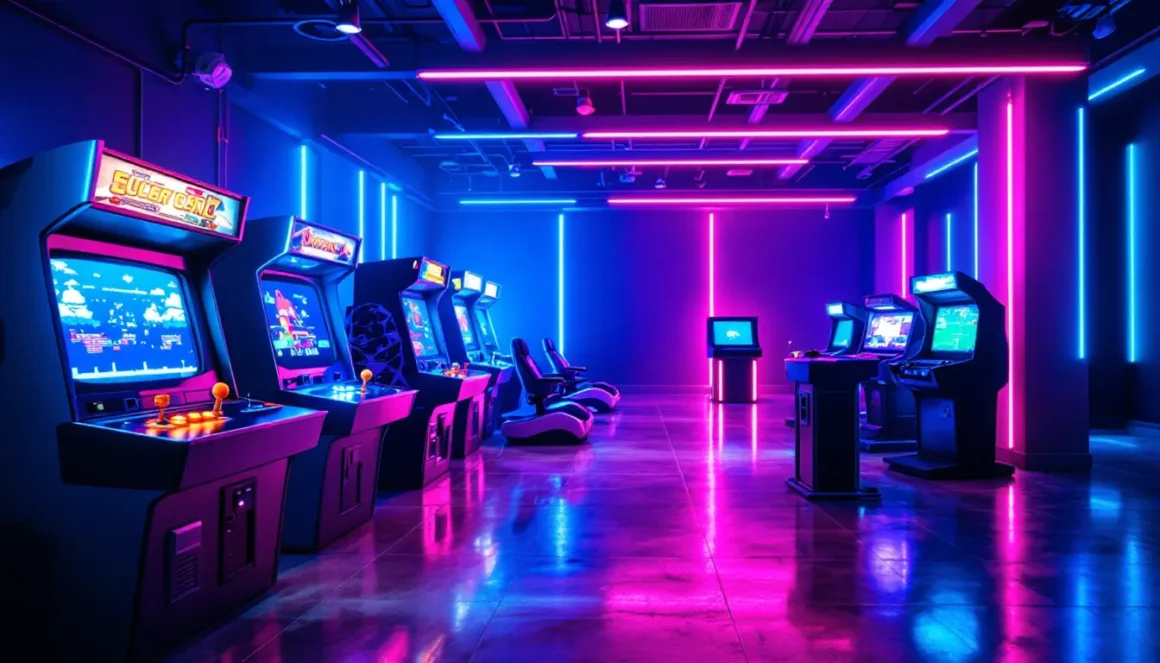
The unmistakable chime of a coin dropping. The satisfying click of a joystick locking into position. The glow of a CRT monitor casting neon light across a darkened room. For decades, arcade games defined what it meant to be a gamer, creating a culture built on high scores, social competition, and quarter-fueled adrenaline rushes. While the landscape has shifted dramatically since the golden age, the legacy of coin-op gaming remains deeply embedded in modern game design, competitive play, and even how we build communities around shared gaming experiences.
In 2026, arcade gaming isn’t just nostalgia, it’s evolving. From immersive VR installations that push the boundaries of physical gaming to retro arcade bars packed with restored cabinets, the medium is experiencing a renaissance that honors its roots while embracing cutting-edge technology. Whether players are chasing leaderboard glory on a vintage Donkey Kong machine or strapping into a full-motion racing simulator, the DNA of arcade gaming continues to influence everything from fighting game tournaments to home entertainment setups.
This guide explores the full spectrum of arcade gaming: the revolutionary titles that built an industry, the cultural forces that nearly killed it, and the innovations keeping it alive in the modern era. For anyone who’s ever fed coins into a machine or wondered what made arcade gaming so special, this is the complete picture.
Key Takeaways
- Video arcade games are coin-operated entertainment machines designed for short, intense gameplay sessions in public venues, fundamentally different from home console and PC games in business model, difficulty curves, and social design.
- The golden age of arcade gaming (1978-1983) introduced revolutionary titles like Space Invaders, Pac-Man, and Donkey Kong that established core design principles still used in modern games today, including ‘easy to learn, difficult to master’ mechanics and score-chasing systems.
- Arcade gaming experienced a steep decline in the 1990s and 2000s due to improved home consoles and online multiplayer, but has resurged through barcades, retro revival culture, VR arcade experiences, and community-driven preservation efforts.
- Modern arcade experiences in 2026 range from restored vintage cabinets in arcade bars to immersive VR installations with full-body haptics and motion platforms, offering experiences that home systems cannot replicate.
- Building a home arcade setup can involve restored original cabinets, multi-game machines like Arcade1Up, or custom MAME builds, with success depending on cabinet choice, quality controls (Sanwa/Seimitsu components), and monitor type.
- The social and competitive dimensions of arcade gaming—high score leaderboards, public performance, and community gathering—remain the core appeal that drives modern arcade revival and continues to influence esports culture and online gaming communities.
What Are Video Arcade Games?
Video arcade games are coin-operated entertainment machines designed for public play in commercial venues like arcades, bowling alleys, movie theaters, and restaurants. Unlike home console or PC games, arcade titles are built around short, intense gameplay sessions optimized for quick turnover and repeat plays.
The business model is simple: insert coins (or tokens), play until the game ends, and decide whether to continue by feeding more money. This economic structure shaped every design decision. Difficulty curves are steep but fair. Controls are immediately intuitive. Feedback is instant and satisfying. The goal isn’t just entertainment, it’s creating an experience compelling enough that players will keep spending.
Arcade cabinets typically feature specialized hardware unavailable in home systems during their era. Dedicated controls like steering wheels, light guns, trackballs, and fighting sticks offered tactile experiences that standard controllers couldn’t replicate. The physical cabinet itself became part of the appeal, with elaborate artwork, directional speakers, and sometimes motion platforms that enhanced immersion.
What truly separates arcade games from other formats is the social dimension. High score tables created ongoing competitions between strangers. Fighting games sparked impromptu tournaments. Difficult games attracted crowds of spectators watching skilled players. This public, communal aspect defined arcade culture and remains one of the key elements enthusiasts try to recapture in modern revival efforts.
The Golden Age of Arcade Gaming (1978-1983)
Revolutionary Titles That Defined the Era
The golden age kicked off with Space Invaders in 1978, a Japanese import that became a global phenomenon. Taito’s shooter introduced progressive difficulty, enemies sped up as players eliminated them, creating tension that kept quarters flowing. The game was so successful it caused a temporary coin shortage in Japan.
Pac-Man arrived in 1980 and shattered assumptions about who arcade games were for. Namco’s maze-chase game appealed to demographics that typically avoided the shoot-em-up heavy arcades, particularly women and families. Its character design and non-violent gameplay made it a cultural icon that transcended gaming. With over 400,000 units sold globally, it became the highest-grossing arcade game ever.
Donkey Kong (1981) introduced Jumpman, later renamed Mario, and pioneered platform gameplay with multiple distinct stages. Nintendo’s debut in the North American market established Shigeru Miyamoto as a design legend and proved arcades could tell stories through gameplay progression.
Ms. Pac-Man (1981), technically an unauthorized modification that Midway licensed, improved on the original with randomized ghost movement patterns that eliminated memorized patterns. Many competitive players consider it the superior version.
Other defining titles included Defender (1981), with its complex multi-button controls and scrolling playfield: Galaga (1981), which refined the fixed-shooter formula: and Tron (1982), which capitalized on movie tie-in marketing and featured groundbreaking vector graphics.
Why the Golden Age Shaped Modern Gaming
The design principles forged during this era remain foundational to game development. The concept of “easy to learn, difficult to master” originated from arcade economics, games needed to attract newcomers while providing depth that kept experts feeding coins.
Score-chasing mechanics evolved into modern achievement systems and leaderboards. The emphasis on immediate feedback and tight controls influenced action game design across all platforms. According to analysis from Game Informer, many contemporary roguelikes and mobile games deliberately emulate arcade-style difficulty curves and session lengths.
The golden age also established gaming as a legitimate entertainment industry. By 1982, arcade games generated $8 billion annually in quarters in the US alone, more than pop music and Hollywood films combined. This commercial success attracted major corporate investment and legitimized gaming as a career path for developers and designers.
Perhaps most importantly, arcades created the first gaming communities. Players developed local reputations, shared strategies, and competed for recognition. This social framework directly influenced modern esports culture, streaming communities, and online multiplayer design.
Most Iconic Video Arcade Games of All Time
Fighting Games: Street Fighter to Mortal Kombat
Street Fighter II (1991) didn’t just save Capcom, it created a genre that dominated arcades through the 90s. The original Street Fighter (1987) introduced special moves executed through joystick motions, but SF II perfected the formula with eight selectable characters, each with distinct move sets and playstyles. The game sparked competitive scenes worldwide and introduced the concept of frame data and hit-box precision that defines fighting game communities today.
Capcom released multiple iterations (Champion Edition, Turbo, Super, etc.), each rebalancing characters and adding features. This iterative patching approach predated modern live-service games by decades.
Mortal Kombat (1992) took a different path, using digitized actors instead of sprites and leaning into controversial violence. The fatality system, elaborate finishing moves, generated media attention and congressional hearings that eventually led to the ESRB rating system. Even though (or because of) the controversy, MK became a cultural touchstone and remains a major esports franchise.
Other fighting game landmarks included Virtua Fighter (1993), which pioneered 3D fighting: Tekken (1994), which refined it: and Marvel vs. Capcom 2 (2000), which pushed team-based combat and combo systems to extreme heights with its 56-character roster.
Shoot ‘Em Ups and Bullet Hell Classics
The shoot-em-up (shmup) genre evolved from simple fixed shooters to complex bullet hell spectacles. Gradius (1985) introduced the power-up bar system where players chose their upgrades, adding strategic depth. R-Type (1987) featured the Force pod, a detachable unit that changed gameplay dynamics, and remains brutally difficult.
The bullet hell subgenre emerged from Japan in the 90s. DonPachi (1995) and Battle Garega (1996) from Cave filled screens with intricate bullet patterns requiring pixel-perfect movement. These games featured tiny hitboxes, often just a few pixels on the player’s ship, that made threading through seemingly impossible patterns possible for skilled players.
Ikaruga (2001) added polarity switching mechanics where players absorbed bullets matching their ship’s color while taking damage from the opposite. This puzzle-like layer on top of traditional shmup mechanics created one of the genre’s most celebrated titles.
Racing and Sports Arcade Legends
Racing games showcased arcade hardware advantages most dramatically. Out Run (1986) featured a full sit-down cabinet with hydraulic motion, a force-feedback steering wheel, and branching routes, revolutionary for its time. Sega’s Super Scaler technology created pseudo-3D environments that home systems couldn’t match.
Daytona USA (1994) brought networked multiplayer racing to arcades with linked cabinets. Its Model 2 hardware delivered textured polygonal graphics that surpassed contemporary consoles. The game’s soundtrack and announcer voice became memes before internet memes existed.
Initial D Arcade Stage (2002) pioneered the use of magnetic cards that stored player data, car tuning setups, and progress across multiple venues. Combined with licensed Toyota AE86s and authentic touge (mountain pass) courses, it created a persistent arcade experience that built dedicated player communities. The franchise continues today across Asia, with establishments that cater specifically to different types of arcade racing games.
Sports games like NBA Jam (1993) exaggerated reality for arcade appeal. The boomshakie physics, “He’s on fire.” announcer, and over-the-top dunks made it accessible while two-player co-op encouraged social play. It reportedly earned over $1 billion in quarters.
How Arcade Games Differ From Console and PC Gaming
The fundamental difference is economic structure. Console and PC games sell as products, players pay once (or subscribe) for potentially unlimited playtime. Arcade games rent time and skill-testing, every death is an opportunity to extract another quarter. This creates completely different design philosophies.
Arcade difficulty curves are steeper and more punishing. Games need to challenge skilled players while remaining approachable enough that beginners feel they can improve with practice (and more coins). The sweet spot is making failure feel like player error, not cheap game design. When executed well, this creates the “just one more try” compulsion that drives revenue.
Control schemes are simpler but more responsive. Most arcade games use joystick and 2-6 buttons maximum. Input lag is virtually nonexistent because the hardware is purpose-built for that specific game. This precision matters more in arcades where skill directly correlates to cost. Fighting game competitors still prefer arcade sticks because the tactile feedback and response time match the original arcade experience.
Session length is another key differentiator. Console games often feature 30+ hour campaigns with save systems and progression mechanics. Arcade games are designed for 3-15 minute sessions. There are no saves, each play is a fresh attempt. This creates pure skill-based gameplay without grind or grinding.
The social environment shapes behavior too. Arcade players have an audience. Performing well attracts attention and respect. Failure is public. This creates psychological pressure that home gaming doesn’t replicate, even in online multiplayer. The physical presence of competitors waiting for their turn adds stakes that virtual matchmaking can’t capture.
Finally, arcades offered bleeding-edge hardware that home systems couldn’t match. During the 80s and 90s, the graphical and audio gap between arcades and home consoles was massive. Arcade boards used dedicated chips, faster processors, and more RAM. Games like Virtua Fighter and Ridge Racer showcased 3D graphics years before home consoles caught up. That hardware advantage has largely disappeared in 2026, forcing modern arcades to differentiate through physical experiences, VR, motion platforms, unique controllers, rather than graphical fidelity.
The Decline and Resurgence of Arcade Culture
The Home Console Era and Arcade Closures
The 1983 video game crash devastated North American arcades alongside the console market. Oversaturation, poor quality control, and economic recession caused revenues to plummet. While arcades recovered somewhat in the mid-80s through titles like Out Run and Street Fighter II, the writing was on the wall.
Home consoles closed the technology gap throughout the 90s. The PlayStation (1994) and Nintendo 64 (1996) delivered 3D graphics that, while not matching arcade quality, were close enough that consumers questioned why they should pay per play. The Dreamcast (1999) even featured arcade-perfect ports of Soulcalibur and Marvel vs. Capcom 2.
Broadband internet delivered the final blow to traditional arcades’ competitive advantage. Online multiplayer eliminated the need to gather physically for competitive gaming. Why spend quarters on Street Fighter III: 3rd Strike when you could play unlimited matches on Xbox Live? According to industry tracking from IGN, the number of dedicated arcade venues in the US dropped from approximately 10,000 in 1990 to fewer than 2,500 by 2010.
The few surviving arcades shifted toward redemption games (ticket-dispensing machines) and experiential attractions that home systems couldn’t replicate. Pure video game arcades became rare outside of certain markets, particularly Japan where arcade culture remained robust due to different social factors and limited home gaming space.
Modern Arcade Bars and Retro Revival
The 2010s saw an unexpected revival driven by nostalgia and craft culture. Barcade, which opened in Brooklyn in 2004, pioneered the arcade bar concept, restored vintage cabinets in venues serving craft beer and cocktails. The model proved successful, sparking hundreds of imitators nationwide.
These venues target adults with disposable income who grew up during the golden age. Most operate on free-play models (pay a cover charge, unlimited games) or maintain low prices (25-50 cents per credit). The emphasis is on social experience rather than profit-per-play. Curated game selections favor beloved classics over obscure titles.
Establishments like Emporium in Chicago and Ground Kontrol in Portland expanded the concept with full restaurant menus and event spaces. Some venues host fighting game tournaments, pinball leagues, and speed-running competitions. The social aspect has come full circle, these spaces recreate the community atmosphere that made arcades special in the first place.
Retro gaming conventions like California Extreme and Midwest Gaming Classic draw thousands of enthusiasts to play rare cabinets, trade parts, and celebrate preservation. Collectors and operators maintain machines that manufacturers abandoned decades ago. Online communities share repair guides, ROM dumps, and circuit board scans to keep games functional.
This grassroots preservation effort has influenced commercial ventures. Netflix‘s mobile games include arcade classics. Streaming platforms feature retro gaming content. Museums like the Museum of Modern Art in New York have acquired Pac-Man and other titles as culturally significant artifacts. What seemed like a dead medium in 2005 has found new life through a combination of nostalgia, community effort, and strategic repositioning.
Modern Arcade Games and Innovations in 2026
VR Arcade Experiences and Immersive Gaming
Virtual reality solved arcade’s biggest 2020s problem: how to offer experiences that home systems can’t match. Commercial VR setups in 2026 use equipment most consumers won’t invest in, full-body haptic suits, omni-directional treadmills, room-scale tracking across massive play spaces, and industrial-grade headsets with wider FOV and higher refresh rates than consumer models.
Zero Latency, The VOID, and Sandbox VR operate location-based VR entertainment centers in major cities worldwide. These experiences feature free-roam multiplayer where groups of 4-8 players navigate physical warehouse spaces while seeing virtual environments. Titles range from zombie shooters to space station exploration, with session times typically 30-60 minutes at $40-60 per person.
The technology has matured significantly. Early VR arcades struggled with hygiene concerns (shared headsets), motion sickness, and technical glitches. Current generation equipment addresses these issues with antimicrobial materials, improved comfort, and robust tracking systems. Some venues now offer VR arcade experiences that blend physical props with virtual objects, touching real walls that appear as alien structures, feeling wind effects, and experiencing temperature changes.
Japan has pushed VR arcades in different directions with seated experiences focused on storytelling and spectacle rather than physical activity. Bandai Namco operates VR Zone facilities featuring anime-licensed content where players sit in motion platforms while wearing headsets. These target a broader demographic, including older players and families less interested in physically demanding experiences.
The economics work because equipment costs remain prohibitive for home use. A full commercial VR setup with haptics and motion platforms can exceed $100,000 per station. As long as that barrier exists, VR arcades maintain a technological advantage similar to what traditional arcades enjoyed in the 80s and 90s.
Prize and Redemption Games Evolution
While enthusiasts focus on video games, prize and redemption machines generate the majority of modern arcade revenue. These skill-based games dispense tickets redeemable for prizes, creating gambling-adjacent experiences that remain legal because of the skill element.
Dave & Buster’s and Round1 operate this model successfully by combining restaurant/bar service with extensive game floors. Their catalogs mix classic video games with contemporary redemption titles like Wizard of Oz Coin Pusher, Tailgate Toss, and various basketball and racing games that dispense tickets based on performance.
The technology has advanced considerably. Modern redemption games use card systems that track tickets digitally, eliminating the paper ticket strips. Mobile apps let players check their point balances and browse prize inventories before visiting. Some chains offer online ordering where players redeem points for prizes shipped directly.
Sega’s UFO catchers (crane games) have evolved into a science. Japanese arcades feature hundreds of machines with different claw strengths, prize positions, and grab mechanics. Dedicated players study specific machines, share strategies online, and sometimes spend hundreds attempting to win limited-edition anime figures. The secondary market for these prizes has created an entire ecosystem of resellers and collectors.
Criticism persists around the gambling-like mechanics and questionable payouts, most redemption games have intentionally low win rates controlled by operators. Children’s entertainment centers face particular scrutiny. But, the financial reality is that these machines subsidize the classic video game sections that drive foot traffic but generate minimal revenue.
Where to Play Video Arcade Games Today
Finding arcade gaming in 2026 requires more strategy than calling the local mall. Different venue types cater to different audiences and game selections.
Barcades and arcade bars remain the best option for classic gaming enthusiasts. These adult-oriented venues feature curated selections of 80s and 90s cabinets in good working condition. Notable chains include Barcade (multiple East Coast locations), 16-Bit Bar+Arcade (Midwest and Ohio), and Free Play (Texas and North Carolina). Most operate on free-play models with cover charges or drink minimums.
Family entertainment centers like Dave & Buster’s, Main Event, and Round1 offer contemporary arcade experiences with modern cabinets, VR attractions, and redemption games. These venues emphasize variety over curation, you’ll find current racing and shooting games alongside claw machines and ticket dispensers. Expect to use reloadable game cards rather than quarters.
Independent arcades survive in certain markets, particularly college towns and gaming-friendly cities like Portland, Austin, and Denver. These often feature competitive gaming setups with tournament-grade fighting game and rhythm game cabinets. Hours and longevity vary, check recent reviews before traveling.
Movie theaters and bowling alleys sometimes maintain small arcade sections, though game selection tends toward licensed titles and older cabinets in varying conditions. These are convenience options rather than destinations.
Japan remains the global arcade capital with massive multi-floor facilities in every major city. Taito Station, Round1, and Club Sega locations feature hundreds of current and classic games unavailable elsewhere. Tokyo’s Akihabara district hosts dozens of arcades within walking distance, including retro-focused venues with rare cabinets from the 80s and 90s.
Online resources help locate venues. Arcade Locations (arcadelocations.com) maintains a crowdsourced database of North American arcades with game lists and condition reports. Regional Facebook groups and Discord servers share information about new venues, tournament scenes, and arcade driving game locations.
For competitive players, fighting game communities maintain lists of tournament-quality setups. Reddit’s r/Fighters and regional FGC Discord servers track which venues have proper tournament monitors (CRT or lag-free LCD), arcade-accurate controls, and active player bases. This matters because not all arcade cabinets are created equal, worn joysticks and miscalibrated monitors affect competitive play.
Building Your Own Home Arcade Setup
Choosing the Right Arcade Cabinet or Multi-Game Machine
Home arcade setups range from single restored vintage cabinets to custom multi-game solutions. The right choice depends on space, budget, technical skill, and whether authenticity or variety matters more.
Restored original cabinets offer authentic experiences but come with challenges. Working vintage machines typically cost $500-2,500 depending on title rarity and condition. Popular games like Pac-Man, Galaga, and Donkey Kong command premium prices. Condition varies wildly, cosmetic issues, monitor problems, and board failures are common. Factor in maintenance costs: CRT monitors eventually die, capacitors fail, and replacement parts become scarce.
Buying restored cabinets requires assignments. Inspect games in person when possible. Test all controls, check monitor burn-in, verify board authenticity (reproductions exist), and confirm the cabinet hasn’t been repainted or modified in ways that hurt value. Enthusiast forums like KLOV (Killer List of Videogames) and Arcade Museum provide pricing data and buying guides.
Multi-game cabinets solve the space problem by housing dozens or hundreds of games in a single unit. Commercial options include Arcade1Up (3/4-scale cabinets, $300-600) and AtGames Legends series (full-size, $500-700). These feature LCD screens, modern controls, and pre-loaded game libraries focused on specific publishers or genres.
These units work well for casual players but have limitations. Scaled-down sizes feel different from original cabinets. Button and stick quality is mediocre compared to arcade-grade components. Licensed game selections omit major titles due to rights issues. But, they’re plug-and-play with no technical knowledge required and take up minimal space.
Custom-built cabinets offer the most flexibility for builders comfortable with DIY projects. Options include:
- MAME cabinets: Build or buy an empty cabinet, install a PC running MAME (Multiple Arcade Machine Emulator), add arcade controls, and load ROMs. Total cost $800-2,000 depending on component quality. Supports thousands of games.
- Raspberry Pi solutions: Budget option using Pi single-board computers running RetroPie. $200-500 total cost for a basic setup. Less powerful than PC-based solutions but handles most 2D games fine.
- Converted cabinets: Purchase a cheap/broken original cabinet and retrofit it with modern hardware. Preserves authentic cabinet feel while adding multi-game functionality.
Controls matter more than most builders realize. Cheap joysticks and buttons feel mushy and imprecise. Invest in Sanwa or Seimitsu components, the same parts used in Japanese arcade machines. A quality joystick costs $25-40, buttons run $2-3 each. The difference in responsiveness and durability justifies the cost.
Monitor choice impacts authenticity. Period-correct CRTs display games as intended with proper color, refresh rates, and response times. But, CRTs are heavy, power-hungry, and increasingly difficult to source. Modern LCD alternatives work fine for most players but lack the scanline aesthetic and zero-latency feel of CRT technology. Specialty products like CRT shaders can simulate scanlines on LCD screens.
For those seeking guidance on full-size arcade games, community forums provide detailed build logs, parts lists, and troubleshooting advice.
Emulation and Legal Considerations
MAME and other emulators exist in legal gray areas that confuse many builders. The emulator software itself is legal, it’s an engineering project that simulates arcade hardware. Game ROMs (the actual game code/data) are copyrighted material. Downloading ROMs of games you don’t own is technically copyright infringement, even for decades-old titles.
Right-holders rarely pursue individuals for personal use, but the legal risk exists. Some publishers actively sell ROM collections, Capcom Arcade Stadium, Atari 50, and SNK 40th Anniversary Collection provide legal ROM access for emulation. These compilations often include permission for use in personal MAME setups, though license terms vary.
Gray area: If you own an original arcade board, some argue you have legal right to download that game’s ROM for personal use under fair use principles. But, copyright law doesn’t explicitly support this interpretation. Courts have never definitively ruled on personal video game emulation legality.
Safer alternatives exist. Free legally distributed ROMs for original homebrew games and expired copyright titles are available through romhacking communities and preservation projects. These provide testing material for custom builds without legal concerns.
Commercial licensing matters more for public installations. Opening an arcade bar using MAME would require negotiating licensing agreements with individual right-holders, an expensive, complex process that explains why most venues use original hardware or licensed multi-game boards.
Preservation advocates argue that emulation serves important cultural purposes. Many arcade games exist only as ROM files because original hardware has failed and manufacturers no longer exist. Projects like Game Rant’s features on arcade preservation highlight this tension between legal restrictions and cultural conservation.
The pragmatic approach for home builders: Understand the legal situation, make informed decisions based on personal risk tolerance, and support official releases when available. Purchase legitimate collections when possible, and consider the ethics of preserving access to abandoned software versus respecting intellectual property rights.
Conclusion
Arcade gaming in 2026 exists in multiple forms, preserved classics in retro bars, cutting-edge VR installations pushing technological boundaries, and home builds that bring coin-op culture into personal spaces. The quarter-munching cabinets that dominated the 80s have evolved, but the core appeal remains: immediate, skill-based gameplay designed for social competition and pure mechanical satisfaction.
The medium has survived by adapting. When home consoles closed the technology gap, arcades shifted to experiential advantages, motion platforms, VR equipment, and social environments that streaming can’t replicate. When venues closed, communities stepped up with preservation efforts and grassroots revivals. The fact that arcade culture has returned speaks to something fundamental about what these games offer.
For players in 2026, arcade gaming means choice. Track down original hardware for authentic experiences. Build custom setups that house entire libraries. Visit VR centers for experiences impossible at home. Each approach captures different aspects of what made arcades special. The high scores may be digital now, but the drive to achieve them remains as analog as ever, pure skill, public performance, and the satisfaction of mastering a game designed to be difficult but fair. That’s the legacy the golden age built, and it’s what keeps players feeding coins (or credits, or tokens, or whatever) into machines four decades later.