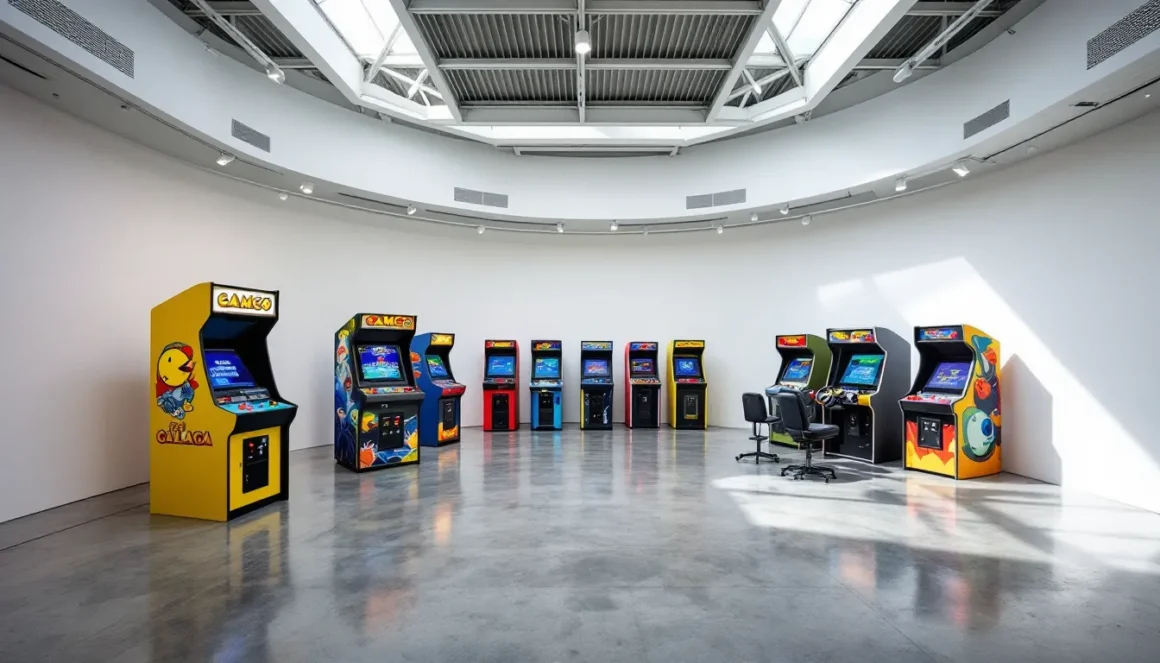
Walk into any conversation about arcade gaming’s golden age and you’ll hear the same names repeated like a high score leaderboard: Pac-Man, Galaga, Pole Position. But there’s one thread connecting these legends, Namco, the Japanese powerhouse that didn’t just participate in the arcade revolution, it defined it. While companies like Atari and Taito carved their own niches, Namco built a portfolio so diverse and influential that its fingerprints are all over modern gaming DNA.
From maze-chase mechanics to vertical shooters and underground puzzle-action hybrids, Namco’s catalog represents more than nostalgia. These games introduced concepts and design philosophies that developers still reference in 2026. Whether you’re hunting for the best way to play these classics today or trying to understand why a yellow circle munching dots became a cultural phenomenon, this guide covers everything from the household names to the hidden gems that deserve a second look.
Key Takeaways
- Namco arcade games like Pac-Man, Galaga, and Dig Dug established foundational design principles—tight gameplay loops, escalating difficulty, and skill-based progression—that developers still reference in modern gaming.
- Namco’s influence extends beyond individual hits; the company pioneered mascot-driven franchising, cabinet design optimization, and genre innovations across maze games, shooters, racing, and action-RPGs that defined the arcade era.
- Pac-Man revolutionized gaming by appealing beyond traditional arcade demographics, generated over $1 billion in quarters within its first year, and demonstrated that gameplay and character design could create lasting cultural phenomena.
- Modern players can access Namco arcade games through official compilations like Namco Museum on Switch and PlayStation, Arcade1Up cabinets, emulation via MAME, or competitive speedrunning communities that keep these classics alive.
- The ghost AI patterns in Pac-Man, enemy capture mechanics in Galaga, and terrain manipulation in Dig Dug reward pattern recognition and memorization, proving that decades-old arcade game design remains mechanically deeper than nostalgia suggests.
The Legacy of Namco in Arcade Gaming History
Namco’s arcade journey started in 1974 when the company shifted from mechanical rides to electronic entertainment. But it wasn’t until 1980 that they dropped the bomb heard ’round the world: Pac-Man. Designed by Toru Iwatani, this game didn’t just succeed, it became a global phenomenon that transcended gaming itself.
What separated Namco from contemporaries wasn’t just one hit wonder. The company consistently innovated across multiple genres throughout the early ’80s. While other studios chased trends, Namco created them. Their approach combined Japanese design sensibility with an understanding of what made quarters flow: tight gameplay loops, escalating difficulty curves, and that “one more try” hook that kept players coming back.
By 1982, Namco had established itself as the premier arcade developer in Japan and a major force internationally. Their games weren’t just technically proficient, they had personality. Colorful sprites, memorable sound effects, and gameplay that was easy to learn but brutal to master became the Namco signature. This wasn’t accidental: it was design philosophy executed at the highest level.
The company’s influence extended beyond software. Namco pioneered cabinet designs that enhanced player experience, from sit-down racing rigs to cocktail-table configurations. They understood that arcade gaming was a physical, social activity, and every element, from screen placement to control responsiveness, mattered. That holistic approach to game design is why Namco titles still feel right when you play them decades later.
Most Iconic Namco Arcade Games of All Time
Pac-Man: The Yellow Icon That Changed Gaming Forever
Pac-Man hit arcades in May 1980 and immediately rewrote the rulebook. Before Pac-Man, arcade games were dominated by space shooters and combat themes. Iwatani wanted something different, something that would appeal beyond the typical arcade demographic. The result was a maze-chase game inspired by a pizza with a slice missing.
The gameplay loop is deceptively simple: navigate a maze, eat dots, avoid ghosts. But the depth comes from the ghost AI patterns. Blinky (red) chases you directly, Pinky (pink) tries to position ahead of you, Inky (cyan) uses complex positioning relative to Blinky, and Clyde (orange) switches between chase and scatter modes. Learning these patterns separates casual players from score chasers.
Pac-Man’s cultural impact can’t be overstated. It generated over $1 billion in quarters within its first year, in 1980 dollars. The character appeared on lunch boxes, in a top-ten hit song, and in a Saturday morning cartoon. Modern gaming’s obsession with mascots and IP merchandising? Pac-Man wrote that playbook.
The game received countless ports and sequels, but the arcade original remains definitive. The tight corridors, precise timing required for ghost patterns, and the anxiety of power pellet management create tension that even contemporary roguelikes struggle to match. If you want to understand why arcade games retain their appeal, Pac-Man is exhibit A.
Galaga: The Space Shooter That Perfected the Formula
Released in 1981 as a sequel to Galaxian, Galaga took the fixed-shooter concept and refined it into something borderline perfect. The setup is pure arcade: you’re a lone fighter at the bottom of the screen, waves of alien enemies swoop down in formation, and your job is to not die while racking up points.
What makes Galaga special is the capture mechanic. Certain enemies can trap your ship with a tractor beam. Lose your ship this way, and you can shoot the captor to reclaim it, giving you dual fighters and doubled firepower. This risk-reward system adds a strategic layer absent from competitors. Do you sacrifice a ship early for the double-fighter advantage later?
The enemy formations and dive patterns follow predictable sequences, which means skilled players can memorize optimal positioning and firing patterns. The challenging stages (every few levels) offer bonus points for hitting every enemy without missing a shot. These stages became the proving ground for serious players, nail a perfect run and you’d have an audience gathered behind you.
Galaga’s audio design deserves credit too. The descending siren sound as enemies swoop creates genuine tension, while the rhythmic beeping accelerates as enemies thin out. It’s Pavlovian conditioning through sound design, making your heart rate match the game’s tempo. Even in 2026, few shooters nail audio feedback this effectively.
Dig Dug: Underground Action and Strategic Gameplay
Nameo’s 1982 release Dig Dug took a completely different approach: underground maze tunneling with enemy inflation mechanics. You play as Taizo Hori (yes, he has a canonical name), armed with a pump that inflates enemies until they pop. Alternatively, you can drop rocks on them for style points.
The brilliance of Dig Dug lies in its terrain manipulation. You’re not navigating preset mazes, you’re carving tunnels through dirt, creating your own pathways and strategic chokepoints. Pookas (the round red monsters) and Fygars (the fire-breathing dragons) follow you through these tunnels, but Fygars can burn horizontal flames that pass through dirt.
High-level Dig Dug play involves baiting enemies into positions where you can drop multiple rocks in sequence, triggering chain reactions for massive point multipliers. The deeper underground you venture, the higher your points for defeating enemies. But going deep means longer escape routes and more enemies converging on your position.
The game’s difficulty ramps fast. Early rounds feel manageable, but by level 5 you’re juggling multiple enemy types in increasingly complex tunnel networks while the enemies speed up. It demands spatial awareness and quick decision-making, skills that translate surprisingly well to modern puzzle-action games.
Pole Position: Racing Into the Future of Arcade Games
When Pole Position launched in 1982, it represented a massive technological leap for racing games. This wasn’t a top-down racer, it was a behind-the-car perspective with scaled sprites that created a convincing sense of speed and depth. The game featured the real Fuji Speedway track in Japan, making it one of the first licensed racing games.
The gameplay centered on qualification laps followed by the main race. Fail to qualify within the time limit, and you don’t even start the race, a brutal but effective design choice that kept quarters flowing. The steering wheel cabinet with a gear shifter became iconic, and the force feedback (vibration on crashes) was cutting-edge tech for the era.
Pole Position established conventions that racing games still follow: the countdown timer creating constant pressure, checkpoints extending your time, and penalties for hitting trackside objects versus other cars. The game distinguished between billboard hits (just slow you down) and sign hits (full crash and reset), teaching players to evaluate risks on the fly.
The sensation of arcade driving games owes everything to Pole Position’s execution. Its influence ripples through every racing franchise from Gran Turismo to Forza, proving that 1982’s innovation remains relevant decades later.
Hidden Gems and Underrated Namco Arcade Titles
Mappy: The Police Mouse Platformer
Mappy (1983) stars a police mouse named, you guessed it, Mappy, who must recover stolen goods from a mansion full of cartoon cats called Meowkies and their boss, Goro. It’s a side-scrolling platformer with a twist: there’s no jump button. Movement is entirely through doors and trampolines, creating a unique traversal system.
The trampolines are the key mechanic. Bounce too many times consecutively on the same trampoline and it breaks, cutting off that escape route. Goro patrols with different behavior patterns depending on the round, and later levels introduce additional Goros to complicate movement planning. The game rewards memorization and route optimization, speedrunner catnip before speedrunning was a thing.
Mappy never achieved Pac-Man’s fame, but it developed a dedicated following in Japan. The character appeared in various Namco crossover titles, and the game itself received mobile and compilation re-releases. Its charm lies in the frantic plate-spinning feeling as you juggle multiple threats while planning your collection route.
For players who enjoyed games like Donkey Kong but wanted something less jump-focused, Mappy offered a distinct flavor of platforming challenge. The doors that temporarily stun enemies create brief safe zones, but using them requires precise timing since enemies can camp on the other side.
Dragon Spirit: Epic Fantasy Shooting Action
1987’s Dragon Spirit took the vertical shooter genre and injected fantasy aesthetics and mechanics. You control a dragon flying over varied landscapes, shooting fireballs and dropping bombs. What sets it apart is the head-growth system, collecting specific power-ups adds extra dragon heads, increasing your firepower.
Lose a head to damage and you’re weakened but not dead, creating a damage-state system that added strategy to power-up management. Do you play aggressively to maximize scoring opportunities, or conservatively to preserve your three-headed configuration?
The game featured branching paths based on performance in certain stages. Save a specific princess character, and you unlock the better route with different bosses and endings. This was ambitious stuff for 1987, adding replay value beyond pure score chasing.
Dragon Spirit also showcased Namco’s graphical prowess. The parallax scrolling, detailed sprites, and massive boss characters pushed hardware limits. The final dragon boss fills nearly the entire screen, and the multi-phase battle tested both your pattern recognition and resource management. Japanese gaming outlets like Gematsu occasionally cover retrospectives on under-appreciated titles like this, highlighting their influence on later shmups.
The Tower of Druaga: Action-RPG Innovation
The Tower of Druaga (1984) is one of the most important games most Western gamers never played. It’s a 60-floor action-RPG maze crawler where a knight named Gil must rescue the maiden Ki from the demon Druaga. Each floor is a single-screen maze with enemies, hidden treasures, and cryptic unlock conditions.
Here’s the catch: most treasures are invisible. You must perform specific actions to make them appear, kill all enemies within a time limit, walk specific patterns, or hit particular wall sections. Without a guide, discovering these secrets requires methodical experimentation. This design philosophy influenced countless Japanese action-RPGs, from Ys to early Zelda.
The game was massive in Japan, spawning a franchise with multiple sequels, anime adaptations, and even a 2008 anime series. Its influence on dungeon-crawler design can’t be overstated. The concept of action-based progression with hidden mechanics became a staple of Japanese game design.
For modern players, Tower of Druaga feels obtuse without a guide. But understanding its historical context, it was designed for arcade players to share discoveries and secrets, reveals its brilliance. It created a community-driven puzzle-solving meta before the internet made that trivial.
Evolution of Namco’s Arcade Technology and Innovation
Graphics and Sound Breakthroughs
Nameco’s technical achievements often flew under the radar compared to gameplay innovations, but they were crucial to the company’s success. The Namco Pac-Man hardware (based on Zilog Z80) became a platform for multiple games, allowing efficient development across titles like Ms. Pac-Man and Super Pac-Man.
By 1982, Namco was pushing sprite scaling and rotation with Pole Position, techniques that required custom chips to execute smoothly. The pseudo-3D effect created by scaled sprites predated true polygon rendering by years, yet achieved convincing depth and speed sensations that held up remarkably well.
Sound design was another frontier. The three-voice sound chip used in early Namco games produced the distinctive beeps, boops, and melodies that became sonic signatures. Pac-Man’s wakka-wakka, Galaga’s dive siren, and Dig Dug’s walking melody are all byproducts of creative limitation, composers squeezing maximum personality from minimal channels.
Later titles like Dragon Saber (1990) and Final Lap (1987) showcased Namco’s continued evolution. Improved color palettes, more detailed sprites, and FM synthesis sound chips elevated production values. Namco wasn’t just keeping pace with technology, they were often defining how to use it effectively in arcade contexts.
The shift to dedicated PCBs for specific games allowed Namco to optimize performance for each title’s needs. Racing games got enhanced sprite scaling hardware, shooters received faster refresh rates, and fighting games (like the later Tekken series) would eventually leverage 3D polygon rendering. This willingness to invest in custom hardware gave Namco titles a technical edge that justified the premium cabinet pricing.
Cabinet Design and Player Experience
Nameco understood that arcade cabinets were more than boxes holding electronics, they were the complete player interface. The company’s cabinet designs ranged from standard uprights to elaborate sit-down cockpits, each optimized for its game’s needs.
Pole Position cabinets featured mounted steering wheels with realistic resistance, shifting mechanisms, and even basic force feedback through vibration motors. These tactile elements sold the racing fantasy in ways visuals alone couldn’t achieve. The angled monitor placement and seat positioning mimicked actual driving perspectives.
Cocktail-table cabinets for games like Pac-Man and Galaga made arcade gaming social in a different way, two players could sit across from each other with the screen between them, rotating the display for each player’s turn. This format thrived in bars and restaurants where arcade cabinets doubled as furniture.
The control schemes themselves showed careful consideration. Pac-Man’s four-way joystick prevented diagonal inputs that would’ve broken the maze-based gameplay. Galaga used a smooth eight-way stick that allowed precise positioning. Dig Dug’s joystick paired with a single pump button, creating a simple but expressive control language.
Later innovations included linked cabinets for multiplayer racing (Final Lap supported up to eight linked machines) and motion platforms that physically tilted with game action. These weren’t gimmicks, they were calculated enhancements to player immersion and, critically, to the perceived value of the arcade experience versus home gaming.
How to Play Namco Arcade Games Today in 2026
Official Compilations and Re-Releases
The easiest legal route to Namco’s classics is through official compilations. Namco Museum has appeared on virtually every platform since the PlayStation 1 in 1995. The most recent iteration, Namco Museum Archives Vol. 1 & 2 on Nintendo Switch, Steam, PS4, and Xbox One, includes NES ports of arcade classics plus some previously Japan-exclusive titles.
Bandai Namco (the company merged with Bandai in 2005) regularly updates these collections. The Switch version released in 2020 includes save states, rewind functions, and display options for scanline filters or modern smooth rendering. These quality-of-life features make the games more accessible without compromising the core experience.
For mobile players, iOS and Android stores have individual releases of Pac-Man, Galaga, and Dig Dug. The touch controls aren’t ideal (arcade games were designed for precise joystick input), but they’re serviceable for casual play. Pac-Man Championship Edition and its sequels offer modernized takes on the original formula with contemporary design sensibilities.
Pac-Man 99 on Nintendo Switch (requires Nintendo Switch Online subscription) cleverly reimagined Pac-Man as a battle royale, pitting 99 players against each other in real-time. It’s not the original experience, but demonstrates how Namco’s designs remain flexible enough for contemporary trends. Players exploring Nintendo Switch arcade games will find these titles prominently featured.
Arcade1Up Cabinets and Home Solutions
For players wanting authentic cabinet experiences, Arcade1Up produces officially licensed ¾-scale replicas of classic cabinets. The Namco Legacy edition includes Pac-Man, Galaga, Dig Dug, Galaxian, Mappy, Rolling Thunder, Dragon Spirit, and others in a single cabinet with original artwork and joystick controls.
These cabinets run around $400-$600 depending on features (lighted marquees, riser stands, etc.). They’re not perfect replicas, the smaller size and LCD screens differ from the original CRT experience, but they capture the aesthetic and control feel better than any gamepad.
For the hardcore enthusiast, sourcing original arcade cabinets remains possible through specialty retailers and auctions. Prices vary wildly based on condition and rarity. A fully restored Pac-Man cabinet might run $2,000-$3,500, while rarer titles like Tower of Druaga command premium prices when they surface.
Restoration is its own hobby. Many collectors buy non-working cabinets and restore them using reproduction parts, original PCBs (printed circuit boards) when available, and period-appropriate CRT monitors. Communities on forums like KLOV (Killer List of Videogames) maintain extensive documentation on restoration techniques and part sourcing.
Multi-game solutions like JAMMA boards allow a single cabinet to run multiple games by swapping PCBs. Purists debate their authenticity, but they offer practical flexibility for collectors with space limitations. Understanding full-size arcade games and the restoration scene helps set realistic expectations for home cabinet ownership.
Emulation and Legal Considerations
Emulation sits in a legal gray area. The software (emulators like MAME – Multiple Arcade Machine Emulator) is legal. The ROM files (game data extracted from original arcade boards) occupy murkier territory. Technically, downloading ROMs you don’t own physical copies of violates copyright, even for decades-old games.
That said, MAME has been instrumental in preserving arcade history. Many rare titles exist only because collectors dumped ROM data before original hardware failed. MAME supports virtually every Namco arcade title ever released, with varying levels of accuracy depending on how well the hardware has been reverse-engineered.
For legality-conscious players, some compilations like Capcom Arcade Stadium have set precedents for reasonably-priced ROM bundles. Bandai Namco occasionally offers similar deals, though their back catalog isn’t always available in regions outside Japan. Coverage from outlets like Siliconera often highlights when these collections go on sale or receive regional releases.
Emulation offers advantages beyond legality concerns, save states, rewind functions, adjustable difficulty, and the ability to slow down gameplay for learning purposes. These features make emulation ideal for studying game mechanics and patterns. But, input lag on modern displays and non-native controls can affect the experience, particularly for timing-critical games like Galaga.
Tips and Strategies for Mastering Classic Namco Games
High Score Techniques and Pattern Recognition
Nameo arcade games reward pattern memorization and consistent execution. Pac-Man ghost patterns are deterministic based on your position and movement. The optimal path through each maze exists, learning it separates 20,000-point players from those chasing records past 1 million.
In Galaga, the “no-miss” strategy focuses on capturing a second ship early (usually stage 1-3), then maintaining position control. Top-tier players know exactly which diving patterns are safe to ignore and which require immediate position adjustment. The challenging stages become pure execution tests, muscle memory developed over hundreds of runs.
For Dig Dug, chaining rock drops maximizes scoring efficiency. Position enemies so a single rock hits multiple targets, and you’re looking at 1,000+ point bonuses per chain. Advanced players dig tunnels specifically to set up these chains, treating the game more like a puzzle than an action title.
Score multipliers and bonus mechanics vary by game but usually involve either speed (complete objectives quickly) or perfection (no deaths, all enemies defeated). Learning which bonuses are achievable versus which require luck helps optimize scoring runs. Don’t chase impossible bonuses at the expense of consistent performance.
Recording and reviewing your gameplay helps identify mistakes. Modern capture cards make this trivial, and analyzing deaths reveals whether you’re struggling with execution or pattern knowledge. The solution differs for each problem.
Understanding Game Mechanics and Enemy AI
Nameo’s enemy AI often appears random but usually follows specific rules. Pac-Man’s ghosts use different targeting algorithms. Blinky targets your current position. Pinky aims four tiles ahead of you (accounting for direction). Inky uses Blinky’s position and your position to calculate his target. Clyde switches between targeting you and retreating to his corner based on distance.
Knowing these rules lets you manipulate ghost positions. Lure them into patterns where they block each other or force them into the far corners while you clear dots. The scatter mode timing (when ghosts retreat to corners) is fixed, creating predictable safe windows for eating power pellets.
Galaga’s capture beam only fires from specific enemy types during certain attack patterns. Learn which dive patterns include potential captures, and you can intentionally farm for the dual-ship power-up. The challenging stages always spawn identical formations, so perfect runs are about execution, not adaptation.
Difficulty progression in these games typically involves faster enemy movement, shorter grace periods, and reduced margin for error. They don’t fundamentally change mechanics, which means skills transfer across difficulty levels. Master the basics on early stages, then apply them under increased time pressure.
Most Namco games use rank systems, hidden difficulty metrics that increase as you play better. Die frequently and the game eases up. Play perfectly and it ramps aggression. Learning how rank affects enemy behavior helps manage difficulty organically, letting you control the game’s pace rather than having it dictated to you.
The Cultural Impact and Enduring Influence of Namco Arcades
Namco’s influence extends far beyond high scores and nostalgia. These games established design principles that echo through modern gaming. The concept of escalating difficulty with consistent mechanics appears in everything from roguelikes to endless runners. Pac-Man’s ghost AI informed enemy behavior systems in countless action games.
The mascot-driven approach to game design became industry standard. Mario, Sonic, Crash Bandicoot, they’re all descendants of Pac-Man’s success as a character brand. Namco proved games could build franchises around characters rather than just genres or mechanics.
Culturally, Namco titles became touchstones. Pac-Man entered the Smithsonian’s permanent collection. Galaga references appear in movies like Avengers (Tony Stark’s hidden Easter egg). These aren’t just games, they’re shared cultural reference points spanning generations. Gaming coverage from sites like NME regularly features retrospectives on how these classics influenced contemporary game design and pop culture.
The preservation movement around arcade games owes much to Namco’s catalog. Collectors, historians, and developers study these titles to understand what made arcade gaming special. The tight gameplay loops, quarter-munching difficulty, and spectator-friendly design created a distinct gaming ecosystem that hasn’t been fully replicated in home or mobile spaces.
Modern indie developers frequently cite Namco games as inspiration. Pac-Man 256 took the kill screen glitch from the original and built an entire game around it. Crossy Road applied Pac-Man-style character branding to the Frogger formula. The DNA is everywhere once you know where to look.
Nameo itself continues evolving. While the arcade business has contracted dramatically from the ’80s peak, the company thrives through franchises like Tekken, Dark Souls (published by Bandai Namco), and ongoing Pac-Man iterations. The lessons learned in those early arcade days, responsive controls, clear feedback, rewarding skill expression, remain core to their design philosophy.
The speedrunning and competitive classic gaming scene keeps Namco titles relevant. Events like Kong Off and tournaments at conventions feature Donkey Kong, but Pac-Man and Galaga competitions draw crowds and skilled players pushing these decades-old games to new limits. World records still fall occasionally, proving the depth hasn’t been fully exhausted.
Understanding different types of arcade games reveals how Namco contributed to nearly every genre, maze games, shooters, racing, platformers, action-RPGs. Few companies matched that breadth while maintaining quality and innovation across categories.
Conclusion
Namco’s arcade legacy isn’t just about nostalgia, it’s about foundational design excellence that remains relevant in 2026. These games succeeded because they nailed the fundamentals: responsive controls, clear objectives, and skill-based progression. Strip away the retro aesthetic and you’re left with pure game design that modern titles still chase.
Whether you’re rediscovering classics through official compilations, building a home arcade setup, or diving into competitive play for the first time, Namco’s catalog offers entry points for every type of player. The breadth, from accessible maze games to demanding shooters and complex action-RPGs, ensures there’s something that’ll click.
The preservation and continued play of these titles isn’t just about remembering gaming’s past. It’s about understanding what works, what endures, and what lessons contemporary designers can still learn from an era when gameplay mattered more than graphics, monetization, or live-service hooks. Namco built games to be played, mastered, and remembered. Forty-plus years later, players are still inserting coins, virtual or otherwise, proving that great design never goes out of style.