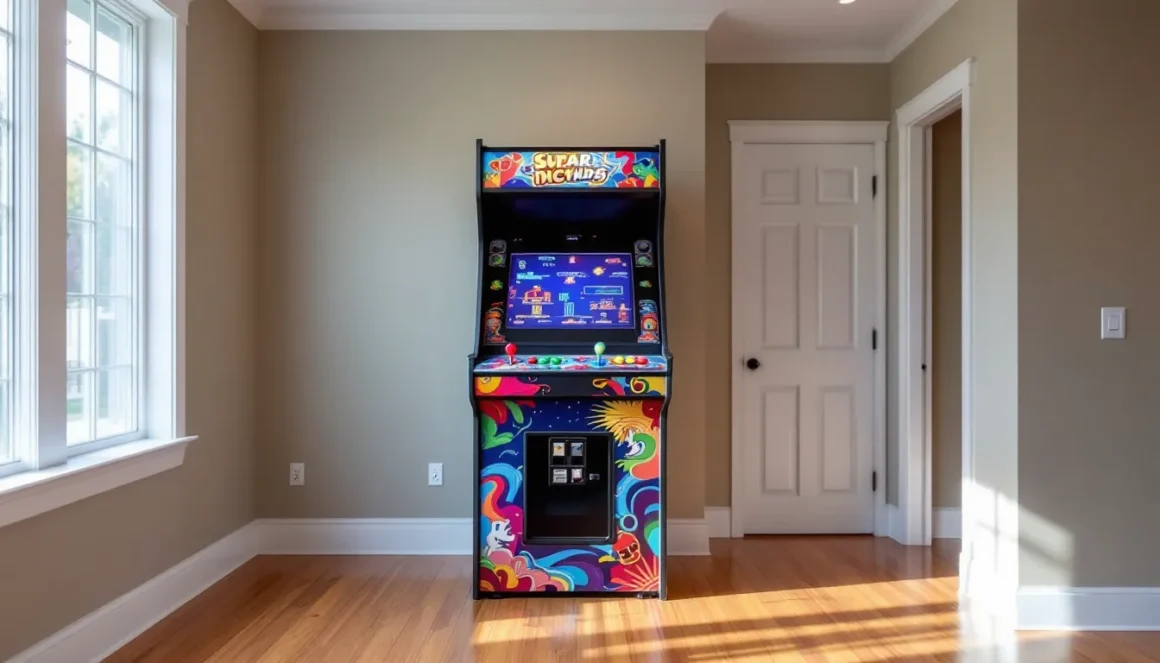
The sound of a joystick clicking into position. The glow of a CRT monitor casting its warm light across a darkened room. The satisfying thunk of a coin dropping into the slot. These aren’t just memories, they’re experiences making a serious comeback in 2026, as full size arcade games carve out permanent spots in living rooms, basements, and game rooms across the country.
Whether someone’s chasing the nostalgia of their youth or discovering the unique appeal of dedicated arcade hardware for the first time, the market for home arcade cabinets has never been stronger. From authentic restored classics to modern multi-game machines packing hundreds of titles, there’s an option for every budget, space, and gaming preference. This guide breaks down everything needed to navigate the world of full size arcade games, from choosing the right cabinet to setting it up and keeping it running for years to come.
Key Takeaways
- Full size arcade games for home use are experiencing a major revival in 2026, driven by nostalgia, superior gaming experiences, and purpose-built hardware that modern consoles cannot replicate.
- Full size arcade games come in four main types—classic single-game cabinets, multi-game machines, vintage originals versus replicas, and DIY builds—each offering different trade-offs between authenticity, variety, cost, and customization.
- Before purchasing, carefully evaluate space requirements (most uprights need 25-30 inches wide by 5.5-6 feet tall), electrical needs (100-300 watts on standard household power), maintenance expertise for vintage machines, and realistic budget from $300 to $3,000+.
- Popular options in 2026 include Arcade1Up’s Ms. Pac-Man/Galaga ($599), Street Fighter II: Champion Edition ($799-899), AtGames Legends Ultimate ($799), and premium collector editions like Killer Instinct Gold ($2,499) for diverse gaming preferences.
- Proper setup requires attention to lighting, sound isolation, climate control, leveling, and surge protection, while regular monthly and quarterly maintenance prevents costly repairs and extends cabinet lifespan significantly.
- Building a quality home arcade succeeds through patience, strategic selection of core game genres, thoughtful room layout, and involving household members in the decision process rather than rushing to fill space impulsively.
Why Full Size Arcade Games Are Making a Comeback
The arcade cabinet revival isn’t just random chance, it’s driven by a perfect storm of nostalgia, collectibility, and a growing appreciation for what dedicated hardware brings to the table.
The Nostalgia Factor
Gen X and millennials who grew up pumping quarters into Street Fighter II, Pac-Man, and Mortal Kombat machines now have the disposable income and space to own the real thing. The experience of playing on original hardware, or faithful replicas, hits differently than emulation on a flat screen. The tactile feedback of authentic Sanwa buttons, the resistance of a proper joystick, even the curve of a CRT screen all contribute to an experience that can’t be fully replicated by modern alternatives.
But nostalgia isn’t just about reliving the past. It’s about preserving gaming history in a tangible form. Original arcade boards and cabinets represent a specific moment in gaming evolution, before online connectivity, before patches, before season passes. What shipped was what players got, and that finality carries its own appeal in an era of live-service everything.
Superior Gaming Experience vs. Modern Consoles
Full size arcade cabinets offer something modern consoles fundamentally can’t: purpose-built hardware designed for a single experience. A Daytona USA cabinet with its force-feedback wheel, pedals, and wraparound seat creates an immersion level that even the best racing sim rig struggles to match. The same goes for light gun games like Time Crisis or rhythm games with dedicated controllers.
The social aspect matters too. An arcade cabinet in a room naturally draws people in. There’s no controller setup, no navigating menus, no PSN login required. Walk up, drop in a credit (real or virtual), and play. That frictionless entry point makes arcade cabinets ideal for parties and casual gaming sessions where modern consoles often feel like work to get started.
Arcade games were also designed with different priorities. No tutorials, no hand-holding, just pure skill-based gameplay with difficulty curves engineered to keep players coming back. That design philosophy feels refreshing in 2026, where many modern games prioritize engagement metrics over tight, focused mechanics.
Types of Full Size Arcade Games for Home Use
The arcade cabinet market offers several distinct categories, each with its own advantages, price points, and ideal use cases.
Classic Arcade Cabinets
Classic single-game cabinets are dedicated machines housing one title, think a Galaga machine that only plays Galaga, with original artwork, controls, and sometimes even the original PCB. These represent the purest arcade experience, with controls and displays optimized specifically for that game.
Authentic classics come in two varieties: restored originals and officially licensed reproductions. Restored originals carry collector value and historical significance but require more maintenance knowledge. Reproductions like Arcade1Up’s recent full-size lineup offer the same visual experience with modern LCD panels and easier maintenance, though purists debate whether they capture the same feel.
Multi-Game Arcade Machines
Multi-game cabinets pack dozens to hundreds of titles into a single machine, typically running off emulation boards or licensed compilation hardware. Popular options in 2026 include machines preloaded with entire publisher catalogs, Capcom fighters, Neo Geo classics, or golden-age compilation boards featuring everything from Donkey Kong to Defender.
The tradeoff here is versatility versus authenticity. A multi-game machine with a standard 8-way joystick and six-button layout handles fighters and beat-em-ups well but feels wrong for games designed around trackballs, spinners, or unique control schemes. Still, for someone wanting maximum variety in minimal space, these machines deliver serious value. Many also offer the timeless appeal of arcade gaming history across multiple decades.
Replica vs. Original Vintage Cabinets
Choosing between replica and original vintage cabinets often comes down to priorities. Original vintage machines offer authenticity, period-correct components, and legitimate collector value. Finding a well-maintained Tempest cabinet with its original vector monitor is a trophy piece that commands respect.
But originals come with baggage. Components fail. CRT monitors need recapping. PCBs develop cold solder joints. Finding replacement parts often means scouring forums and hoping someone has a spare board in their garage. For someone with electronics repair knowledge, this can be part of the fun. For everyone else, it’s a potential nightmare.
Replicas eliminate most maintenance headaches. Modern components last longer and are easier to replace. LCD panels don’t need degaussing or convergence adjustment. The visual experience closely matches the original, especially with good scanline filters and proper calibration. The main sacrifice is collector value and the satisfaction of owning an authentic piece of gaming history.
Custom-Built and DIY Arcade Cabinets
The DIY arcade scene has exploded in recent years, supported by affordable single-board computers, extensive software options, and detailed build guides. A custom cabinet lets builders choose exact dimensions, control layouts, and game libraries while keeping costs significantly below commercial options. Those interested in building custom arcade experiences can tailor every aspect to their preferences.
Popular DIY approaches include Raspberry Pi-based builds running RetroPie, more powerful PC builds in custom cabinets, and MAME-dedicated machines. The barrier to entry has dropped considerably, pre-cut cabinet kits, plug-and-play control boards, and step-by-step video tutorials make the process accessible even to those with limited woodworking experience.
The downside? Time investment. A quality DIY build takes dozens of hours between construction, wiring, software configuration, and troubleshooting. But for those who enjoy the building process as much as the end result, few things beat the satisfaction of playing on hardware built with their own hands.
Top Full Size Arcade Games Worth Buying in 2026
The current market offers strong options across price points and game types. Here’s what’s worth considering.
Best Classic Single-Game Cabinets
For those chasing authenticity, these single-game machines represent the cream of the crop:
Ms. Pac-Man/Galaga Class of ’81 Reunion – Arcade1Up’s full-size version of this dual-game classic hits the sweet spot of nostalgia and reliability. The vertical monitor is properly sized, controls feel responsive, and having both games in one cabinet adds replay value. Street price hovers around $599.
Street Fighter II: Champion Edition (Big Blue) – Capcom’s official full-size reproduction of the iconic blue cabinet captures everything that made SF2 a cultural phenomenon. Six-button layout per player, proper spacing, and excellent build quality. The Sanwa-style controls hold up to competitive play. Expect to pay $799-899 depending on retailer.
NBA Jam: Shaq Edition – The definitive arcade basketball experience, now in a proper full-size cabinet with enlarged controls for comfortable two-player action. The backlit marquee and side art reproduction are particularly impressive. Limited production runs mean prices vary, but $699-799 is typical.
Best Multi-Game Arcade Machines
These machines prioritize variety and value:
AtGames Legends Ultimate – The most versatile multi-game platform available in 2026, featuring 350+ licensed games pre-installed plus the ability to add custom content via USB. The 24-inch screen, proper trackball and spinner support, and expandable control options make it surprisingly capable across different game types. At $799, it represents serious bang for the buck.
X-Arcade Tankstick Bundle – While technically a control interface that requires separate hardware, the Tankstick’s full-size dual-stick layout works with PC, consoles, and dedicated multi-game boards. The build quality rivals commercial cabinets, and it’s compatible with virtually any emulation setup. $499 gets the complete package.
Neo Geo MVS Cabinet (Custom Builds) – For fighting game enthusiasts, a dedicated Neo Geo MVS (arcade system) cabinet running original cartridges delivers the definitive experience for classics like The King of Fighters ’98 and Metal Slug. Custom builders offer these in the $1,200-1,800 range with cartridge swapping capability.
Premium Collector’s Edition Cabinets
For those with deeper pockets and serious collector instincts:
Killer Instinct Gold Edition – Officially licensed, limited production run with museum-quality construction. This thing weighs over 300 pounds and features every detail from the original down to the distinctive cabinet shape and proper CRT display option. $2,499, but worth it for KI fanatics.
Sega Rally Championship Twin – The full sit-down experience with force-feedback wheel, proper pedals, and side-by-side cabinets for competitive racing. These are rare enough that prices vary wildly, but expect $3,000+ for a quality restoration.
Dance Dance Revolution SuperNOVA Cabinet – Full-size metal dance pad, proper lighting, authentic feel. The fitness gaming renaissance has driven demand through the roof for these, with quality examples commanding $2,000-3,500 depending on condition.
What to Consider Before Buying a Full Size Arcade Game
Impulse-buying a 300-pound arcade cabinet can lead to regret. These factors deserve careful thought before clicking purchase.
Space Requirements and Room Planning
Full-size cabinets aren’t compact. Standard uprights measure roughly 25-30 inches wide, 30-35 inches deep, and 5.5-6 feet tall. That’s the cabinet itself, add another 6-12 inches on all sides for comfortable play and access to the rear panel for maintenance.
Doorway clearance matters too. Most cabinets can be maneuvered through standard 32-inch doors with careful angling, but tight corners or narrow hallways can be dealbreakers. Sit-down cabinets and driving games need even more space, often 4-5 feet deep and requiring clearance for the seat to slide back.
Ceiling height deserves attention. Standard 8-foot ceilings work fine for most uprights, but basement installations with lower clearance can create awkward playing positions. And consider room function: will the cabinet sit in a dedicated game room, or does it need to coexist with family space? The constant attract-mode sounds and screen glow can wear on household members if placement isn’t thought through.
Budget Considerations: New vs. Refurbished vs. Vintage
Price ranges vary dramatically based on condition and authenticity:
Budget tier ($300-600): Entry-level reproductions, smaller-scale cabinets, or heavily modified vintage machines. Arcade1Up’s standard lineup sits here, as do basic DIY builds and rougher vintage cabinets needing work.
Mid-range ($600-1,500): Full-size reproductions, quality multi-game machines, and solid vintage cabinets in good condition. This range offers the best value for most buyers, proper size and build quality without collector premiums.
Premium ($1,500-3,000): Limited editions, pristine vintage restorations, specialty cabinets with unique controls. These represent either serious collector pieces or elaborate sit-down/cockpit-style games.
High-end ($3,000+): Museum-quality restorations, rare vintage machines, custom commissioned builds. This tier is for dedicated collectors with specific wants and the budget to match.
Refurbished vintage machines occupy a tricky middle ground. A properly restored cabinet can offer better value than reproductions, but quality varies wildly between sellers. Testing equipment and gaming monitors remains challenging, as expert reviews from sources like PCMag’s arcade testing show in their annual coverage.
Power and Electrical Requirements
Most full-size arcade cabinets run on standard 110V household power and draw 100-300 watts during operation, comparable to a modern gaming PC. A dedicated circuit isn’t usually necessary unless running multiple cabinets or operating in a space with limited electrical capacity.
CRT-based vintage machines draw more power and generate more heat than LCD reproductions. A classic Mortal Kombat cabinet with a 25-inch CRT can push 250-300 watts and noticeably warm a small room during extended play. LCD-based reproductions typically stay under 150 watts and run much cooler.
Power supply quality matters for vintage machines. Clean, stable power extends component life and reduces glitches. A basic surge protector is minimum protection: an uninterruptible power supply (UPS) adds extra insurance for expensive vintage boards.
Maintenance and Repair Accessibility
Before buying, understand what keeping the machine running will require. Reproduction cabinets with modern components typically need minimal maintenance, maybe a monitor replacement every 5-10 years and occasional button/joystick replacement if heavily used.
Vintage machines are a different beast. CRT monitors require periodic maintenance. PCBs develop issues. Power supplies fail. The question isn’t whether repairs will be needed, but when and whether parts are available. Research the specific game and platform before buying, some have robust aftermarket support and active repair communities, while others are borderline impossible to maintain without specialized knowledge.
Control components are the most common maintenance need regardless of cabinet type. Joysticks wear out. Buttons crack. Trackballs need cleaning. The good news is these parts are relatively affordable and easy to replace with basic tools. Most arcade controls use industry-standard mounting, making upgrades straightforward.
Setting Up Your Home Arcade Game
Getting a cabinet home is one thing. Getting it set up properly is another.
Ideal Placement and Room Setup
Basements and dedicated game rooms are obvious choices, but arcades can work in other spaces with proper planning. Key factors include:
Lighting control: Arcade screens, especially CRTs, fight with ambient light. Rooms with adjustable lighting or natural darkness work best. Direct sunlight or bright overhead lights create glare and wash out colors.
Sound considerations: Attract mode loops and gameplay sound can irritate household members. Rooms with doors that close, or spaces away from bedrooms and quiet areas, prevent conflict. Most cabinets include volume controls, but some vintage machines are just loud by nature.
Flooring: Carpet provides cushioning for standing play but makes moving cabinets difficult. Hard flooring (wood, tile, concrete) works better for maintenance access but can be tough on feet during long sessions. Compromise with foam anti-fatigue mats in front of the cabinet.
Climate control: Consistent temperature and humidity extend cabinet life. Damp basements can cause control rust and monitor issues. Extreme temperature swings stress electronic components. Avoid uninsulated garages and unconditioned spaces if possible.
Assembly and Installation Tips
Most reproductions ship partially disassembled to reduce shipping damage. Assembly typically involves:
- Attaching the control panel to the main cabinet body
- Mounting the marquee and connecting its lighting
- Installing the coin door (if included)
- Connecting internal wiring between components
- Final positioning and leveling
Two people make assembly much easier, especially when lifting the monitor assembly into position. Take time to organize and route cables properly, future-you will appreciate tidy internals when troubleshooting issues.
Leveling matters more than most people expect. An uneven cabinet creates weird visual effects and can stress the frame over time. Use shims or adjustable feet (available as aftermarket upgrades) to get the cabinet perfectly level in both directions.
Many enthusiasts position their cabinets similar to the layouts shown in historic arcade spaces, creating authentic-feeling arrangements even in home settings.
Protecting Your Investment
A few proactive steps dramatically extend cabinet life:
Surge protection: At minimum, use a quality surge protector. Better yet, add a UPS to prevent sudden power-offs that can corrupt software or damage components.
Dust management: Keep the area clean and periodically wipe down the cabinet. Dust infiltration is the silent killer of arcade electronics. Canned air and microfiber cloths handle most cleaning needs.
Control covers: When not in use, draping a light cover over control panels prevents dust accumulation and accidental button presses (especially important with pets or kids around).
Documentation: Photograph the cabinet’s internal wiring before making any changes. Document settings, dip switch configurations, and any modifications. This information becomes invaluable during future troubleshooting.
Insurance: Homeowner’s or renter’s insurance may not automatically cover collectible arcade machines. Check the policy and consider adding a rider for valuable cabinets, especially vintage or rare examples.
Maintaining and Troubleshooting Your Arcade Cabinet
Regular maintenance prevents small issues from becoming expensive problems.
Regular Maintenance Checklist
Monthly tasks:
- Wipe down control panel, monitor bezel, and cabinet exterior
- Test all buttons and joystick directions
- Check monitor for color accuracy and image geometry
- Verify all audio levels and speaker function
- Inspect cables for wear or loose connections
Quarterly tasks:
- Deep clean trackball or spinner mechanisms (if equipped)
- Check internal cable routing and connections
- Inspect power supply for dust buildup
- Test coin door and credit mechanisms
- Verify all safety-related components (if applicable)
Annual tasks:
- Full inspection of PCB for corrosion or component issues
- Replace control springs and microswitches showing wear
- Clean or replace monitor screen protector
- Check cabinet structural integrity (especially feet and corners)
- Back up any software/settings (for modern multi-game machines)
Vintage machines with CRTs require additional maintenance expertise. Monitor caps degrade over time and need replacement every 15-20 years. Finding someone qualified to work on CRTs is increasingly difficult in 2026, making this a significant consideration for vintage cabinet owners.
Common Issues and How to Fix Them
Unresponsive controls: Usually caused by failed microswitches or loose wiring. Controls use simple switches that trigger when pressed, if a button doesn’t register, the switch has likely failed. Replacement switches cost $1-2 each and swap in minutes with basic tools.
Screen issues (LCD): Modern LCD panels rarely fail outright but can develop stuck pixels or backlight problems. Most reproduction cabinets use standard LCD panels with accessible connectors, making replacement straightforward if needed. For detailed testing methods, reviews on RTINGS display testing provide comprehensive guidance on diagnosing screen problems.
Screen issues (CRT): Vintage monitors present complex challenges. Weak colors usually indicate failing capacitors. Geometry problems (curved lines, compressed images) require adjustment of internal pots, a task best left to experienced technicians due to the lethal voltages inside CRT monitors.
Audio problems: No sound usually means a bad connection or blown fuse. Distorted sound suggests failing speakers or amplifier issues. Most arcade speakers are standard sizes available from electronics suppliers. Amplifier boards can often be replaced with modern equivalents if originals fail.
Software glitches (multi-game machines): Modern emulation-based cabinets occasionally need software resets or updates. Most manufacturers provide USB-based update files and clear instructions. If a game consistently crashes or shows graphical errors, check the manufacturer’s support site for firmware updates.
Power issues: If the cabinet doesn’t turn on, check the obvious first, power cord, outlet, any inline switches or fuses. Vintage machines often include fused power supplies with easily replaceable components. Complete power supply failure usually requires board-level repair or replacement.
Where to Buy Full Size Arcade Games
Finding the right cabinet means knowing where to look and what to watch for.
Online Retailers and Manufacturers
Direct from manufacturers: Companies like Arcade1Up, AtGames, and iiRcade sell directly through their websites. Benefits include full warranties, customer support, and confidence in what’s being purchased. Downsides include higher prices and limited selection compared to aftermarket options.
Amazon and major retailers: Broader selection and competitive pricing, plus easier returns if something arrives damaged. Stock varies considerably, popular cabinets sell out quickly, while others linger at discount prices. Read reviews carefully: quality control can be inconsistent.
Specialty arcade retailers: Companies like RecRoomMasters, Tornado Terry’s, and Dream Arcades specialize in arcade sales and restoration. Prices run higher than reproductions, but expertise and build quality often justify the cost. These outfits also offer custom build services for those wanting specific configurations.
eBay and marketplace sites: Widest selection but highest risk. Buying vintage cabinets sight-unseen is gambling, photos can hide serious issues, and shipping costs can exceed the cabinet’s value. Local pickup is vastly preferable, allowing inspection before purchase. For exploring the variety of classic options, understanding different types of arcade games helps narrow down searches.
Local Arcade Distributors and Auctions
Local arcade distributors: Search for commercial amusement distributors in the area. These businesses supply machines to bars, restaurants, and entertainment venues. Many also sell to individuals and sometimes offer used trade-ins at reasonable prices. Building a relationship with a local distributor provides access to maintenance knowledge and parts sources.
Auctions and estate sales: Occasionally, arcade collections hit the auction block. These can offer excellent values but require quick decision-making and the ability to transport cabinets immediately. Inspect carefully, auction items are typically sold as-is with no returns.
Arcade closing sales: When arcades or entertainment venues shut down, they liquidate inventory. Finding these sales takes networking and luck, but prices can be extremely favorable. Join local arcade enthusiast groups on social media to hear about opportunities.
Craigslist and Facebook Marketplace: Best source for local vintage cabinets. Prices range from “free if you haul it away” to delusional asking prices with no relationship to reality. Patience pays off, good deals appear regularly for those willing to wait. Always inspect in person and test functionality before agreeing to purchase.
Collector forums: Communities like KLOV (Killer List of Videogames) and ArcadeControls host active marketplace forums where enthusiasts buy, sell, and trade cabinets. Sellers here often have better knowledge of what they’re selling, and the community helps police fraudulent listings. For those considering DIY arcade projects, these forums also provide invaluable technical resources.
Building Your Own Home Arcade Experience
Multiple cabinets create something greater than the sum of their parts, a genuine home arcade atmosphere.
Start with core genres rather than quantity. A vertical fighter/shooter cabinet, a horizontal classics cabinet, and a racing or light gun game creates variety without redundancy. Themed collections (all Capcom fighters, all golden-age classics, all racing games) offer coherence but limit appeal to guests with different tastes.
Room layout matters enormously. Back-to-back placement maximizes space efficiency and creates natural groupings. Leave 3-4 feet between facing cabinets for comfortable traffic flow. Position the most popular or visually striking cabinet in the room’s focal point to draw attention.
Ambiance elevates the experience beyond just having games. LED strip lighting adds arcade atmosphere without overwhelming the space. Neon signs (real or LED reproductions) provide visual interest and nostalgia. Period-appropriate posters and memorabilia on walls complete the vibe without very costly. For those interested in modern twists, incorporating VR arcade experiences alongside traditional cabinets creates interesting contrasts.
Seating deserves thought. Stools work for quick plays and tournaments. A couch or comfortable chairs let spectators watch without crowding players. Avoid seating that’s too comfortable, arcades are active spaces, not lounges.
Sound management becomes critical with multiple machines. Overlapping attract modes create cacophony fast. Many multi-cabinet owners install individual volume controls or master switches to quiet machines not in active use. Alternatively, dedicated spaces with sound-dampening materials contain the noise.
Growing a collection takes time and patience. Rushing to fill space leads to purchases that get regretted later. Watch the market, learn what’s available, and only pull the trigger when the right cabinet at the right price appears. Many collectors report their best acquisitions came from patience and networking rather than impulsive buying.
Involving household members in the space increases its value beyond personal hobby. Kids who help choose or decorate the arcade invest in its success. Partners who have input on placement and game selection are more likely to embrace cabinets in shared spaces. The best home arcades feel like community spaces rather than one person’s domain.
For serious collectors, documentation and preservation become important. Photograph cabinets in detail. Record serial numbers and manufacturing dates. Save original artwork and promotional materials. These details matter for resale value and contribute to gaming history preservation. Some games that defined the evolution of racing mechanics, like those covered in arcade driving game history, become increasingly valuable as preservation pieces.
Conclusion
Full size arcade games offer something modern gaming can’t replicate, dedicated hardware designed around pure, focused gameplay experiences. Whether someone’s buying a single nostalgic favorite or building an entire home arcade, the options in 2026 are stronger than ever.
The key is matching the cabinet type to actual needs rather than chasing vague ideas of what an arcade “should” be. Understand the space, budget realistically, plan for maintenance, and buy games that will actually get played. A single well-chosen cabinet that sees regular use beats a dozen collecting dust.
The arcade revival shows no signs of slowing. As more people discover the appeal of physical, dedicated gaming hardware, the market will continue expanding. Now’s an excellent time to jump in, whether that means a reproduction classic in the corner of a den or a full basement transformation. The quarters are optional, but the enjoyment is guaranteed.