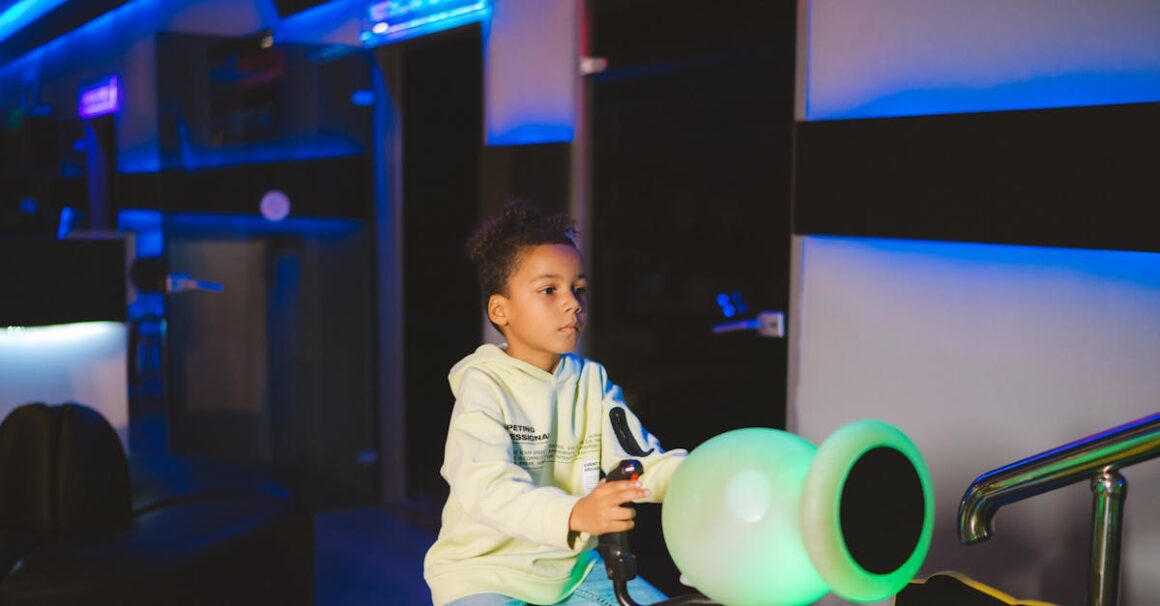
Arcade games have been captivating kids for generations, and in 2026, they’re more accessible and diverse than ever. Whether you’re a parent hunting for screen time that actually builds skills, a gamer introducing your own kids to the classics, or someone planning a birthday bash with a retro vibe, arcade games deliver something unique: instant feedback, simple controls, and that addictive “one more try” energy.
This guide cuts through the noise to deliver exactly what you need, classic titles that still slap, modern innovations that wow, age-specific recommendations backed by actual design principles, and practical advice on where to play, what to watch for, and how to make arcade gaming a win for everyone involved. No fluff, just the good stuff.
Key Takeaways
- Arcade games for kids deliver instant feedback, simple controls, and physical engagement that build hand-eye coordination, motor skills, and pattern recognition without requiring long tutorials or complex learning curves.
- Modern arcade accessibility has never been better—kids can play classic titles through home cabinets ($300-600), mobile compilations, retro console releases, or local entertainment centers that offer family-friendly hours and VR experiences.
- Age-appropriate arcade game selection matters: ages 3-6 need simple, consequence-free games like Whac-A-Mole; ages 7-10 thrive with classics like Pac-Man and Mario Kart Arcade GP; pre-teens enjoy challenging fighting games and rhythm competitions with measurable skill progression.
- Arcade games teach valuable life skills including risk assessment, resource management, social problem-solving through co-op play, and healthy perspectives on failure and iteration.
- Setting clear time limits (90-minute sessions or daily restrictions), monitoring content ratings, and encouraging breaks every 20-30 minutes ensures healthy, balanced arcade gaming that respects screen time concerns.
- Hosting an arcade-themed party or home gaming event works best with 2-3 hour sessions, mixed game variety, optional tournament brackets, and simple food—creating natural social engagement without constant parental intervention.
Why Arcade Games Remain Perfect for Kids in 2026
Arcade games haven’t stuck around this long by accident. They’re engineered for quick dopamine hits and immediate comprehension, no tutorials, no 50-hour campaigns, just pick up and play. For kids, that translates to a gaming experience that respects their attention span while still delivering challenge and reward.
The physical aspect matters, too. Modern arcade setups, whether it’s a classic joystick cabinet or a motion-controlled rig, get kids moving in ways console gaming rarely does. Steering wheels, dance pads, light guns, and VR headsets all demand physical engagement, which parents appreciate when screen time debates heat up.
Another overlooked advantage: arcade games are inherently social. High score boards create friendly competition, co-op modes teach teamwork, and the short session length means kids naturally take turns. Compare that to the solo grind of many modern AAA titles, and it’s clear why arcade formats still have a place in 2026.
Accessibility has never been better. Between retro compilations, home arcade cabinets dropping in price, and dedicated family entertainment centers popping up nationwide, kids today can access both the classics their parents loved and cutting-edge innovations that weren’t possible a decade ago. It’s the best of both worlds.
Classic Arcade Games Every Kid Should Experience
Pac-Man and Maze Chase Adventures
Pac-Man remains the gold standard for maze-chase gameplay, and kids still get it instantly. The rules are dead simple: eat dots, avoid ghosts, grab power pellets to turn the tables. What makes it brilliant for young players is the escalating difficulty, early levels teach pattern recognition, later ones demand quick reflexes and planning.
Variations like Ms. Pac-Man and Pac-Man Championship Edition (available on modern platforms) add wrinkles to the formula without losing that core accessibility. The 2022 Pac-Man World Re-PAC brought 3D platforming to the franchise, but for pure arcade experience, stick with the original or Championship Edition 2.
Other maze-chase classics worth checking out include Dig Dug and Mr. Do., both of which introduce spatial strategy layers that reward clever thinking over pure twitch reflexes. These games teach kids to think three moves ahead while keeping sessions short and snappy.
Donkey Kong and Platform Jumping Games
Nintendo’s Donkey Kong (1981) invented platforming as we know it, and it’s still a masterclass in game design. Four distinct levels, clear objectives, and that satisfying risk-reward tension when deciding whether to grab the hammer or dodge barrels. Kids learn timing, risk assessment, and spatial awareness without realizing they’re learning anything.
Donkey Kong Jr. flips the script, putting players in the role of rescuer rather than hero. Popeye offers similar single-screen platforming with more emphasis on collection than jumping. For something more modern with that same energy, the Nintendo Switch arcade compilation brings these classics into 2026 with save states and rewind features that ease frustration for younger players.
The beauty of these games is their transparency, you always know exactly why you failed and what you need to do differently. That immediate cause-and-effect relationship is gold for developing brains.
Space Invaders and Retro Shooters
Space Invaders might look primitive by 2026 standards, but its escalating tempo and risk-reward structure still hooks kids. As the alien formation advances and speeds up, players learn resource management (limited shields) and prioritization (which row to target first). According to GamesRadar+, retro shooters have seen a resurgence in family entertainment centers precisely because of their intuitive controls and clear win conditions.
Galaga improves on the formula with the dual-fighter mechanic and challenging stages that break up the action. Centipede and Millipede add trackball controls and spatial puzzle elements that feel fresh even today. These aren’t mindless shooters, they’re pattern-recognition exercises wrapped in colorful explosions.
For modern takes, Space Invaders Forever (2020) and Galaga Wars deliver updated visuals while preserving core mechanics. The key is finding versions with adjustable difficulty, most modern compilations include kid-friendly modes that slow the action or add extra lives.
Modern Arcade Games Designed for Young Players
Motion-Controlled and VR Arcade Experiences
VR arcades exploded between 2023 and 2026, and kid-friendly experiences led the charge. Games like Beat Saber (with age-appropriate music packs) and Fruit Ninja VR translate phone-game simplicity into full-body workouts. The VR arcade revolution has made immersive experiences accessible to kids as young as seven, with proper supervision and session time limits.
Angry Birds VR: Isle of Pigs nails the difficulty curve for younger audiences, familiar IP, intuitive slingshot mechanics, and no scary content. Job Simulator and Vacation Simulator offer goofy, consequence-free exploration that kids devour. Most VR arcades now offer 10-15 minute sessions specifically designed for children’s comfort and safety.
Motion-controlled arcade games outside VR deserve attention too. Hologate systems and LAI Games products dominate modern arcades with zombie shooters, sports challenges, and rhythm games that require players to physically dodge, jump, and reach. These experiences blur the line between gaming and active play in ways that satisfy both kids and parents.
Interactive Racing and Sports Simulators
Kid-friendly racing cabinets have evolved dramatically. Cruis’n Blast (2021 arcade version, also on Switch) delivers over-the-top action racing with animals, UFOs, and school buses as playable vehicles, exactly the kind of chaos kids love. Mario Kart Arcade GP DX remains the crown jewel of family racing, with accessible drift mechanics and item-based mayhem that levels the playing field between skill levels.
Racing game evolution has produced simulators that adapt difficulty on the fly, keeping younger players competitive without feeling patronized. Modern cabinets often feature assist options, bumper rails, and automatic acceleration, invisible helping hands that preserve the fun.
Sports simulators have gotten smarter, too. Basketball arcade games now use camera tracking to adjust hoop difficulty based on player height. Mini bowling lanes and skee-ball variants incorporate digital scoring and achievement systems that hook the Fortnite generation. HyperBowling and Flamin’ Finger merge physical skill with digital rewards in ways that traditional sports can’t match.
Cooperative Multiplayer Arcade Games
Luigi’s Mansion Arcade (2015, still widely available) showcases what co-op arcade gaming can be, two players working together, motion-controlled ghost catching, and a structure that encourages communication. It’s ghostbusting without the scary bits, perfect for kids who want action without jump scares.
Teenage Mutant Ninja Turtles arcade game (the 1989 Konami classic, re-released in various compilations) remains the beat-’em-up benchmark for kid-friendly co-op. Four players, simple combat, iconic characters, and automatic revives that keep everyone in the action. Modern spiritual successors like Teenage Mutant Ninja Turtles: Shredder’s Revenge (2022) capture that same energy with updated visuals.
Pump It Up and Dance Dance Revolution turn rhythm gaming into group activities. Kids naturally gravitate toward these because they’re performative, others watch, cheer, and wait their turn. The social loop is baked in. Mobile gaming coverage has noted that rhythm games bridge casual and core audiences better than any other genre, and arcade versions amplify that effect.
Educational Benefits of Arcade Gaming for Children
Hand-Eye Coordination and Motor Skill Development
Arcade games are stealth training for fine motor skills and reaction time. The feedback loop is faster than almost any other activity, press button, see immediate result, adjust. Neurological studies consistently show that action gaming improves visual processing speed and spatial attention, skills that translate directly to sports, music, and even reading.
Classic arcade controls, joysticks, trackballs, steering wheels, develop different motor patterns than touchscreens or standard controllers. Trackball games like Centipede build rotational wrist control. Steering wheels with force feedback teach cause-and-effect through physical resistance. Light gun games improve target acquisition and follow-through.
The short session structure prevents fatigue while encouraging repetition, which is exactly how motor learning works. Kids get dozens of attempts in a 20-minute session, each one slightly refined. That’s more reps than they’d get in an hour of traditional sports practice, compressed into pure, focused iteration.
Problem-Solving and Strategic Thinking
Arcade games teach pattern recognition faster than almost any educational software. Kids learn to spot enemy movement patterns in Galaga, optimal routes in Pac-Man, and timing windows in platform games, all without explicit instruction. The game shows, the player adapts, improvement follows.
Resource management appears in unexpected places. Should you use that power-up now or save it? Is it worth the risk to grab that bonus item? These micro-decisions stack up, teaching risk assessment in consequence-free environments. Failure costs nothing but a continue credit, so experimentation is encouraged.
Multiplayer arcade games add social problem-solving. Different types of arcade experiences demand communication, role assignment, and shared strategy. Co-op beat-’em-ups teach kids to divide enemies and watch each other’s backs. Versus games introduce competitive analysis, what’s my opponent likely to do, and how do I counter it?
Age-Appropriate Arcade Game Recommendations
Best Arcade Games for Ages 3-6
This age bracket needs bright colors, clear feedback, and low consequence for failure. Whac-A-Mole and its digital variants nail this, simple objective, physical interaction, obvious success state. Skee-Ball works for the same reasons, plus it builds underhand throwing mechanics.
Digital options include Fruit Ninja Arcade (swipe fruit, avoid bombs, that’s it) and Crossy Road Arcade (Frogger for the modern age, with adorable characters and forgiving difficulty). Fishbowl Frenzy and similar ticket-redemption games satisfy the cause-effect learning phase while building hand-eye coordination.
Avoid anything with complex narratives, time pressure, or sudden loud noises. Stick to games where failure just means trying again, not losing progress. Balloon Pop variants and whack-a-mole-style games dominate this age range for good reason, they’re pure, simple fun.
Top Picks for Ages 7-10
This is the sweet spot for classic arcade experiences. Kids have the manual dexterity for joystick games and the cognitive capacity for basic strategy. Pac-Man, Donkey Kong, and Dig Dug all work perfectly here. Galaga introduces shoot-’em-up mechanics without overwhelming complexity.
Racing games shine in this age bracket. Mario Kart Arcade GP offers just enough depth to reward skill while keeping casual players competitive. Arcade driving games designed for this demographic usually feature bright visuals, forgiving controls, and optional assist features.
Teenage Mutant Ninja Turtles, The Simpsons Arcade Game, and other co-op beat-’em-ups become accessible here. The combat is simple enough for quick mastery, but stage variety and co-op dynamics provide depth. Time Crisis and light gun games work if the content is age-appropriate, stick to zombie shooters or sci-fi themes, skip military realism.
Dance Dance Revolution and Pump It Up become genuinely playable in this age range. Kids have the coordination for basic patterns and the stamina for full songs. Rhythm games also introduce musical timing and pattern memorization in ways that feel like play, not education.
Challenging Options for Ages 11 and Up
Pre-teens and early teens can handle genuine arcade challenges. Street Fighter II and other fighting games become accessible, the execution barriers are still high, but the strategic depth clicks at this age. Classic arcade gameplay resonates differently with this age group, who appreciate the skill ceiling and competitive aspects.
Daytona USA, Initial D Arcade Stage, and other advanced racing games demand real driving lines and drift control. The skill progression is satisfying in ways that casual racers can’t match. These games respect the player’s intelligence and reward practice.
Rhythm games at higher difficulties, Sound Voltex, Beatmania IIDX, Guitar Hero Arcade, provide genuine challenge and measurable improvement. The competitive arcade scene around these games offers something rare: meritocratic ranking systems where practice directly correlates to results.
VR experiences can go deeper here. Beat Saber expert levels, Pistol Whip, and story-driven VR adventures like Vader Immortal work for mature tweens. Cooperative shooters and strategy games become viable as attention spans lengthen and communication skills develop.
Where to Play: Arcade Venues, Home Setups, and Digital Platforms
Local Arcade Centers and Family Entertainment Venues
Dedicated arcades have made a comeback in 2026, but they look different than the coin-op halls of the ’80s. Modern venues like Round1, Dave & Buster’s, and local independent arcades combine classic cabinets with redemption games, VR stations, and food service. Most use card systems instead of quarters, swipe to play, eliminating the need for constant coin conversions.
Look for arcades with explicit family hours or kid-friendly sections. Some venues separate loud, intense games from calmer areas, which matters when you’ve got a six-year-old who’s sensitive to sensory overload. Many arcades now offer birthday packages with private party rooms, game credits included, and staff supervision.
Main Event, Urban Air, and similar entertainment centers bundle arcade games with other attractions, trampolines, laser tag, mini golf. These work well for group outings where not every kid is equally into gaming. The arcade becomes one option among many, reducing pressure and extending engagement.
Pricing varies wildly. Unlimited-play passes (usually 2-3 hours for $20-30) beat pay-per-play if your kids will actually use them. Time-based pricing rewards focused play over wandering. Some venues offer annual memberships that include discounts and bonus credits, worth it if you’re planning regular visits.
Home Arcade Cabinets and Retro Consoles
Home arcade cabinets have gotten affordable and compact. Arcade1Up machines (2/3 scale, $300-600) deliver authentic controls and official licenses for classics like Pac-Man, Galaga, Street Fighter II, and X-Men. They’re furniture-quality and take up less space than you’d think, about the footprint of a small bookshelf.
For something smaller, Picade and Evercade offer desktop arcade experiences and retro compilations. The Evercade VS (2021, still supported in 2026) plays official cartridge collections across multiple retro systems, including arcade classics. It’s plug-and-play with no emulation gray areas.
Polymega and MiSTer FPGA systems appeal to serious collectors, offering cycle-accurate arcade emulation across dozens of platforms. These require more setup and investment ($400+), but they’re archival-quality solutions if you’re building a permanent game room.
Retro compilations on modern consoles offer the easiest entry point. Arcade Archives on Switch, Antstream Arcade (cloud-based retro gaming, PC/Xbox/mobile), and Capcom Arcade Stadium all deliver official arcade releases with save states, rewind, and difficulty adjustments. No hardware needed beyond your existing console.
Mobile and PC Arcade Game Collections
Mobile arcade compilations walk a fine line between authentic and monetized-to-death. Pac-Man and Galaga have official iOS/Android versions that respect the source material while adding optional modern modes. Stay away from free-to-play versions loaded with energy systems and ads, they poison the arcade experience.
Apple Arcade ($6.99/month in 2026) includes several arcade-style games with no ads or IAP: Crossy Road Castle, Super Impossible Road, and Warp Drive all capture that pick-up-and-play energy. The subscription model means kids can explore freely without hitting paywalls.
PC platforms offer more robust collections. Steam carries countless arcade compilations, including Capcom Arcade Stadium, SNK 40th Anniversary Collection, and Namco Museum Archives. These often include historical materials, arcade settings (DIP switches), and scanline filters for authenticity nerds.
Game-focused sites frequently cover retro gaming deals and bundle releases, arcade compilations go on sale often, sometimes hitting 75% off during seasonal sales. Building a collection of 50+ arcade classics for under $100 is completely viable in 2026 if you’re patient.
Safety and Parental Guidance for Kids’ Arcade Gaming
Setting Time Limits and Healthy Gaming Habits
Arcade games are designed to eat time, that’s part of their DNA. Setting clear boundaries before you start prevents arguments later. The arcade session structure actually helps here: buying a 90-minute unlimited pass creates a natural endpoint that kids can visualize and accept.
For home setups, use platform parental controls to set daily limits. Switch, Xbox, PlayStation, and PC all support time restrictions that lock games after a set duration. The key is consistency, rules that shift arbitrarily create conflict. Better to set a firm “30 minutes on weekdays, 60 on weekends” policy than to wing it case-by-case.
Encourage breaks every 20-30 minutes, especially for VR or intense games. The “20-20-20 rule” works well: every 20 minutes, look at something 20 feet away for 20 seconds. It prevents eye strain and gives kids a chance to reset. Most modern arcade cabinets even have attract modes specifically designed to give players’ eyes a break.
Arcade games teach a weird lesson about failure that’s actually healthy, you lose constantly, and that’s expected. Embrace it. Kids who rage-quit after a few tries need coaching on iteration and improvement. Frame arcade gaming as skill-building, not win-chasing, and the mindset shifts.
Monitoring Content and Age Ratings
Not all arcade games are created equal, and age ratings matter. ESRB ratings exist on compilations and modern releases, use them. E (Everyone) is safe across the board. E10+ introduces mild cartoon violence (think Teenage Mutant Ninja Turtles). T (Teen) ventures into fighting games and more intense action.
Classic arcade games predate formal ratings, so use judgment. Mortal Kombat might be a classic, but its fatalities aren’t for elementary schoolers. Galaga and Dig Dug feature shooting and violence in the most abstract sense, bugs and aliens that poof into pixels. Context matters.
Physical arcades sometimes have games designed for adult audiences, gambling-style skill games, horror experiences, or shooters with realistic violence. Walk the floor with your kid first, point out which machines are off-limits, and explain why. Most good arcades already section adult-oriented games separately.
For mobile and PC versions, check privacy policies and data collection. Some “free” arcade apps harvest data or show targeted ads. Stick to paid versions or known-safe subscriptions like Apple Arcade. The COPPA regulations (Children’s Online Privacy Protection Act) theoretically protect kids under 13, but enforcement is inconsistent. When in doubt, play it yourself first.
Hosting an Arcade-Themed Kids’ Party or Gaming Event
Arcade parties hit different than standard birthday fare, they’re active, competitive, and naturally structured. The key is variety: mix physical games (skee-ball, basketball), classic cabinets (Pac-Man, Donkey Kong), and modern attractions (VR stations, racing simulators) so every kid finds something that clicks.
Booking an arcade venue simplifies logistics dramatically. Most offer packages that include private areas, game credits, and food service. Round1 and Main Event typically bundle 90-120 minutes of unlimited play with pizza and drinks for $25-35 per kid. Staff handle setup and cleanup, leaving you free to supervise and take photos.
For home parties, rent equipment. Several companies now rent Arcade1Up cabinets, multiplayer console setups, and even full VR rigs for weekend rates ($100-300 depending on package). Combine this with a classic arcade aesthetic, neon colors, pixel art decorations, retro candy (Fun Dip, Ring Pops, Nerds), and you’ve got a theme that works.
Structure matters for younger kids. Create a “passport” or bingo card with different games they need to try, rewarding exploration over pure competition. For older kids, run a tournament bracket in a fighting game or racing sim, with actual prizes for top three. High score competitions work well for classic games, post a leaderboard and let kids chase records across the party duration.
Consider a ticket-redemption element even at home. Award points for completing challenges, then let kids “spend” them on dollar-store prizes at the end. It mimics the arcade ticket system and gives non-competitive kids something to work toward besides beating their peers.
Food should be simple and arcade-appropriate. Pizza is the default for good reason, easy to eat between games, universally liked, minimal mess. Add popcorn in retro striped containers, individual chip bags, and juice boxes. Skip sit-down meals: arcade parties work best as continuous flow with food available as needed.
Timing the event for 2-3 hours prevents overstimulation while maximizing fun. Younger kids (under 8) do better with shorter windows. Older kids can sustain longer sessions, especially if you’ve got enough game variety to prevent boredom. Build in a 15-minute cake/presents break in the middle to reset energy levels.
Conclusion
Arcade games occupy a unique space in 2026, they bridge generations, deliver immediate gratification without complexity overload, and sneak genuine skill-building into purely fun experiences. Whether your kid is mashing buttons on a Pac-Man cabinet or dodging virtual obstacles in a VR rig, they’re learning pattern recognition, risk assessment, and motor control while having a blast.
The accessibility piece is huge. Between local arcades making comebacks, affordable home cabinets, and digital compilations on every platform, there’s no excuse to skip this part of gaming history. Your kids deserve to experience the games that laid the foundation for everything they play today, and you deserve to see their faces light up when they “get” why these games have lasted 40+ years.
Start simple, find a local arcade, bring a stack of credits, and let your kid explore. Watch what grabs them. Maybe it’s the rhythm games, maybe it’s the racing simulators, maybe it’s the quarter-munching classics. Follow that thread, build on it, and you’ve got a hobby that teaches while it entertains. That’s rarer than you think.