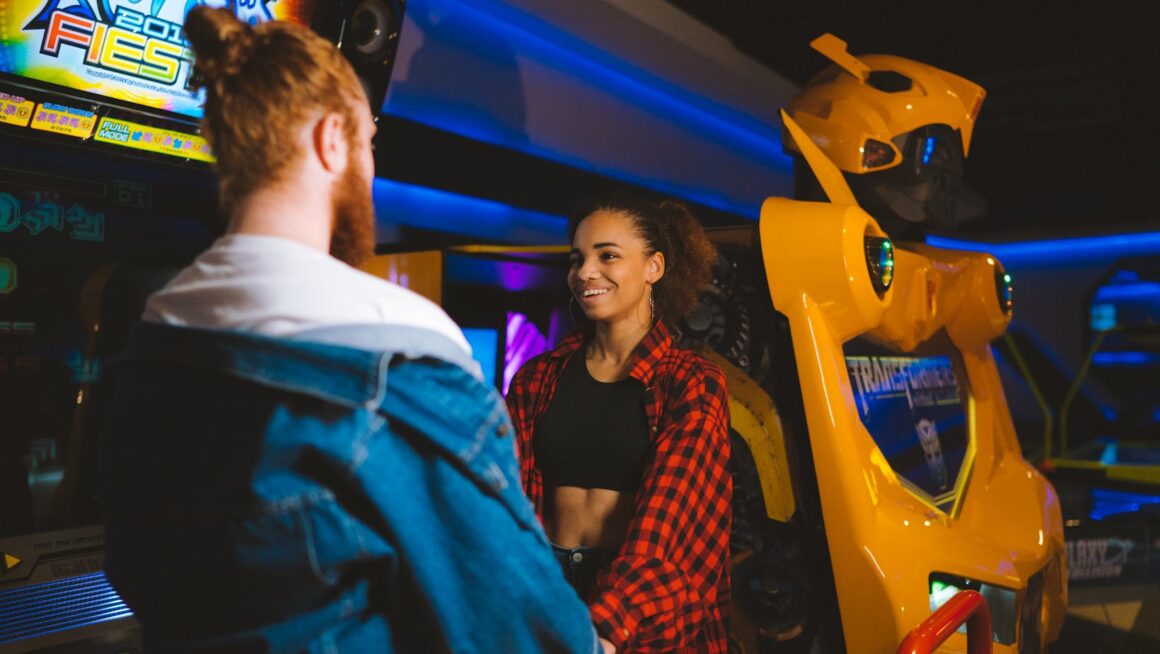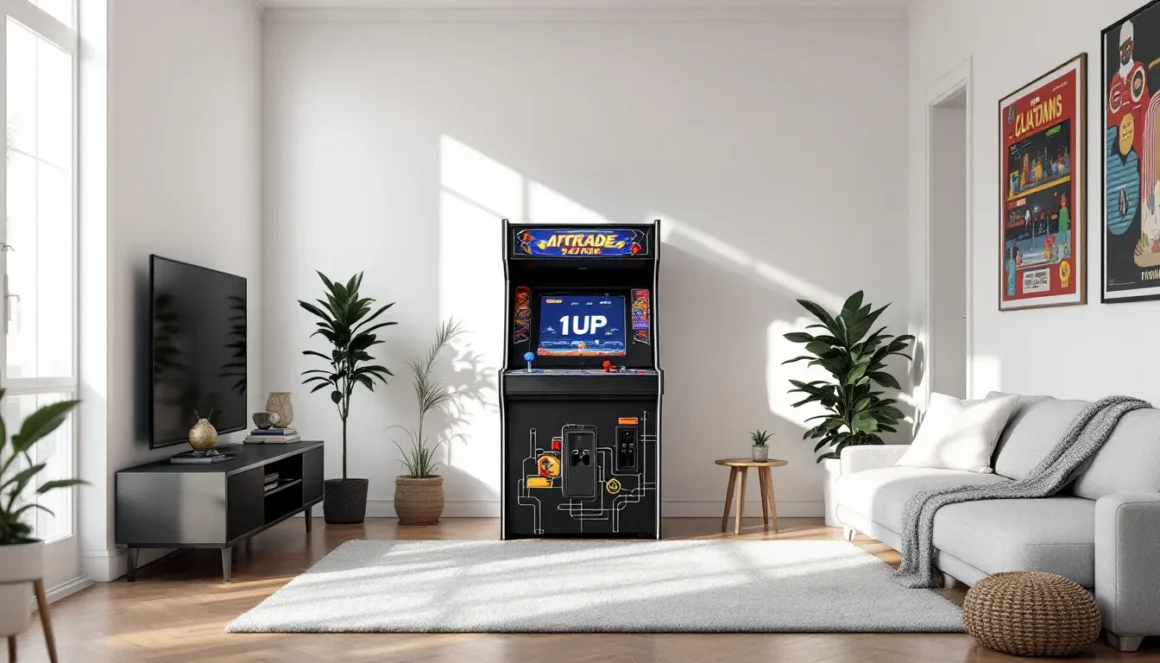
There’s something electric about hearing that distinct chime when you grab an extra life, a sound that’s been hardwired into gaming DNA since the golden age of arcades. The term “1UP” represents more than just an additional chance to beat the high score: it’s a symbol of perseverance, skill, and the raw, unfiltered joy of classic arcade gaming. Whether you’re a veteran who remembers pumping quarters into cabinets at the local pizza joint or a younger player discovering these titles through modern collections, 1UP arcade games continue to captivate gamers across generations.
In 2026, the retro gaming scene is thriving like never before. Classic arcade titles are experiencing a renaissance through home cabinets, digital collections, and competitive speedrunning communities. From the iconic beat ’em ups that defined co-op gaming to the precision platformers that separated casual players from true masters, these games offer a purity of design that modern titles often struggle to replicate. This guide dives deep into everything you need to know about 1UP arcade games, their history, the best titles, how to play them today, and how to build your own setup at home.
Key Takeaways
- 1UP arcade games represent a pure gaming experience centered on mastery, pattern recognition, and fair-but-challenging difficulty that remains compelling across generations.
- Modern access to 1UP arcade games is easier than ever through Arcade1Up cabinets ($300–$600), digital collections like Capcom Arcade Stadium, and DIY emulation setups using RetroPie or MAME.
- The most popular 1UP arcade titles span beat ’em ups like Final Fight and Streets of Rage, fighting games like Street Fighter II, and platformers like Donkey Kong and Metal Slug—each with distinct mechanical depth.
- Building a home arcade setup requires choosing between pre-built cabinets, DIY construction, or bartop units, then investing in quality controls (Sanwa or Seimitsu parts) and low-lag displays for authentic gameplay.
- Competitive arcade communities thrive through online platforms like Fightcade, local tournaments at retro venues, and leaderboards maintained by Twin Galaxies, keeping 1UP arcade gaming alive as both casual hobby and serious competition.
- Success in 1UP arcade games demands understanding deterministic enemy patterns, exploiting invincibility frames, maximizing bonus systems, and committing to single-credit runs (1CC) to truly master these timeless classics.
What Are 1UP Arcade Games?
The term “1UP” originated in arcade gaming’s early days, referring to player one’s score and life counter. When you collected a 1UP item or reached a specific point threshold, you earned an extra life, crucial in an era when continues cost real money. Over time, “1UP arcade games” has evolved to encompass the entire spectrum of classic arcade titles from the late ’70s through the mid-’90s, particularly those that featured the iconic life system.
These games share common DNA: quarter-eating difficulty curves, pattern-based gameplay, high score tables that immortalized your initials, and mechanics designed for short, intense sessions. Unlike modern games with save systems and infinite retries, arcade titles demanded mastery. You learned enemy patterns, perfected your timing, and squeezed every extra life from bonus stages.
The 1UP concept became so ingrained in gaming culture that it transcended arcades entirely. Console ports, home exclusives, and even modern indie titles reference the terminology. When players talk about “1UP arcade games” today, they’re typically referring to authentic arcade experiences, whether played on original cabinets, home arcade machines like Arcade1Up units, or through emulation and official collections.
What separates these games from their console counterparts isn’t just the cabinet or controls. Arcade versions were often significantly harder, with tighter timing windows and more aggressive AI designed to keep players feeding quarters. The arcade ROM of a game like Final Fight plays noticeably different than its SNES port, with faster enemy spawns and less forgiving hit detection.
The History and Legacy of 1UP Arcade
From Arcade Cabinets to Home Gaming
The arcade boom began in earnest with Space Invaders (1978) and Pac-Man (1980), but it was the mid-’80s that defined the golden age. Companies like Capcom, Konami, SNK, and Namco competed fiercely for arcade floor space, pushing technical boundaries with each release. Cabinet designs evolved from simple upright units to elaborate sit-down cockpits for racing games and dual-screen setups for titles like Darius.
By the late ’80s, home consoles began threatening arcade dominance. The NES brought arcade-quality experiences into living rooms, forcing arcade manufacturers to innovate. This led to the fighting game boom of the early ’90s, Street Fighter II (1991) alone generated over $10 billion in revenue and kept arcades relevant for another half-decade. Beat ’em ups like Teenage Mutant Ninja Turtles and X-Men turned co-op gameplay into social events.
The arcade industry’s decline accelerated through the late ’90s as home consoles matched and eventually exceeded arcade hardware capabilities. The Dreamcast (1999) brought arcade-perfect ports home, while PlayStation 2 and Xbox made the arcade experience feel redundant for most players. By the mid-2000s, traditional arcades had largely vanished from Western markets, surviving primarily in Japan and specialized retro gaming venues.
Yet the story didn’t end there. The 2010s sparked a retro revival, with companies like Arcade1Up launching affordable home cabinets starting in 2018. These ¾-scale replicas brought authentic arcade experiences to living rooms without the $3,000+ price tags of original cabinets. Digital collections from publishers like Capcom, SNK, and Hamster Corporation’s Arcade Archives series preserved hundreds of classic titles across modern platforms.
The Cultural Impact of the 1UP Concept
The 1UP system did more than extend gameplay, it created a universal language for gamers. The green mushroom in Super Mario Bros. became as recognizable as any corporate logo. The phrase “getting a 1UP” entered common vocabulary, transcending gaming to describe second chances in everyday life.
Arcades served as social hubs before online gaming existed. Players gathered around cabinets to watch skilled competitors attempt high scores, learning strategies through observation. The quarter-on-the-machine system for claiming next game became unwritten law. This physical, communal experience shaped gaming culture in ways that modern online lobbies can’t fully replicate.
The difficulty philosophy of arcade games influenced game design for decades. The “Nintendo Hard” era of the late ’80s directly inherited arcade’s punishing difficulty curves. Even today, the roguelike and souls-like genres draw inspiration from arcade design principles: pattern recognition, risk-reward decision making, and the satisfaction of earned mastery rather than grinding stats.
Competitive gaming owes its existence to arcade high score tables. Twin Galaxies, founded in 1981, turned arcade performance into legitimate competition. Billy Mitchell’s Donkey Kong records and the King of Kong documentary brought arcade gaming to mainstream attention. Modern speedrunning communities continue this tradition, with classic arcade titles remaining staples of events like Games Done Quick.
Most Popular 1UP Arcade Games of All Time
Classic Beat ‘Em Ups and Fighting Games
Beat ’em ups defined arcade co-op gaming. Final Fight (1989) set the template: side-scrolling action, simple but satisfying combat, and perfectly paced difficulty that ramped up just enough to encourage one more continue. Players who mastered the invincibility frames on Haggar’s throws could dominate, but most ended up pumping quarters through Metro City’s six stages.
Streets of Rage 2 (though primarily a Genesis title) and Teenage Mutant Ninja Turtles: Turtles in Time (1991) elevated the genre with better movesets and more varied level design. The latter’s time-traveling stages and satisfying enemy-throwing mechanics made it an arcade staple. Konami’s X-Men (1992) pushed co-op to six simultaneous players, creating chaotic multiplayer mayhem that modern games rarely match.
Fighting games exploded with Street Fighter II and never looked back. The King of Fighters ’98, Mortal Kombat II (1993), and Marvel vs. Capcom 2 (2000) became tournament staples. The arcade versions maintained competitive legitimacy, console ports often had timing differences or balance changes that made them unsuitable for serious play. Even today, fighting game tournaments occasionally use original arcade hardware or cycle-accurate emulation to ensure fairness.
Legendary Platformers and Run-and-Gun Titles
Platformers and run-and-gun games demanded pixel-perfect execution. Donkey Kong (1981) started it all, with Jumpman (later Mario) navigating barrel-throwing apes across increasingly complex stages. The “kill screen” at level 22, caused by a programming bug, became legendary, with only a handful of players ever reaching it before the 2007 workaround discovery.
Metal Slug (1996) perfected the run-and-gun formula with hand-drawn sprite art that still looks gorgeous on modern displays. The series’ arcade driving games cousins couldn’t match its visual fidelity, but Metal Slug’s slower pace and generous continues made it more accessible than contemporaries like Contra.
Contra and Contra: Hard Corps tested reflexes to their absolute limits. The famous Konami Code became gaming lore because players desperately needed those 30 lives. Arcade purists scoffed at code users, true mastery meant 1CC (one credit clear) runs, beating the entire game on a single quarter.
Bubble Bobble (1986) proved platformers didn’t need precision jumping to succeed. The bubble-trapping mechanics and 100-level quest created an addictive gameplay loop. Its two-player co-op encouraged both cooperation and friendly competition for power-ups.
Iconic Puzzle and Retro Games
Pac-Man remains the most commercially successful arcade game ever, generating over $14 billion in revenue since 1980 (adjusted for inflation). The ghost AI patterns became the subject of academic study, each ghost follows specific chase algorithms that players can exploit once memorized. Ms. Pac-Man (1982) improved the formula with randomized patterns, making it the preferred competitive version.
Tetris found its greatest success in arcades before dominating the Game Boy. The arcade version’s faster piece drops and stricter timing separated casual players from experts. Modern Tetris competitions still reference DAS (delayed auto shift) and other mechanics refined in arcade implementations.
Galaga (1981) and Galaxian built on Space Invaders’ foundation, adding enemy dive patterns and the famous double-ship mechanic. Competitive Galaga players memorized the “no-fire” technique on early stages to manipulate scoring patterns, a strategy that remained secret for years.
Donkey Kong Jr. and Dig Dug rounded out the early ’80s puzzle-platformer scene. Both featured simple concepts executed perfectly, with escalating difficulty that ensured no quarter lasted too long. The evolution of zombie arcade games would later take some inspiration from Dig Dug’s underground monster-clearing mechanics.
How to Play 1UP Arcade Games Today
Arcade Cabinets and Retro Gaming Machines
Arcade1Up revolutionized home arcade gaming with ¾-scale cabinets priced between $300-$600. These officially licensed units feature authentic artwork, proper joystick and button layouts, and pre-loaded game collections. The Marvel vs. Capcom cabinet includes six Capcom fighters, while the Pac-Man Legacy Edition packs 14 Namco classics.
For purists seeking full-size authenticity, original cabinets remain available through specialty retailers and auctions. A working Street Fighter II: Champion Edition cabinet runs $1,500-$3,000 depending on condition. Restoration projects appeal to hardcore enthusiasts, finding a trashed cabinet for $200-$500 and restoring it to glory becomes a passion project. Sites like KLOV (Killer List of Videogames) maintain databases of cabinet specifications and restoration guides.
Bartop arcades offer middle-ground solutions. These countertop units cost $200-$400 and take minimal space while maintaining authentic controls. Many accept custom artwork and can run MAME (Multiple Arcade Machine Emulator) for unlimited game libraries, though legal ROM acquisition remains a gray area.
Modern alternatives include Neo Geo MVS systems and Pandora’s Box multi-game boards. The MVS (arcade version of Neo Geo) plays original cartridges and maintains tournament-legal accuracy for SNK fighters. Pandora’s Box units cram 3,000+ games into plug-and-play packages, though quality varies wildly across different manufacturers.
Emulation and Digital Collections
Emulation offers the most comprehensive access to arcade history. MAME remains the gold standard, with cycle-accurate emulation of over 8,000 arcade systems. Modern builds run flawlessly on budget hardware, a Raspberry Pi 4 handles most pre-2000 arcade titles without framedrops. RetroArch provides user-friendly frontend interfaces with shader support that mimics CRT scanlines and phosphor glow.
Legal emulation exists through official collections. Capcom Arcade Stadium (2021) and its sequel include 60+ classics with rewind features, online leaderboards, and display filters. SNK 40th Anniversary Collection preserves lesser-known titles like Vanguard and Athena alongside obvious picks. Namco Museum Archives spans multiple volumes across Switch, PlayStation, and Xbox.
Hamster Corporation’s Arcade Archives series releases individual titles weekly on modern consoles. Each $7.99 release includes the original Japanese and international versions, plus Caravan and Hi-Score modes for competitive play. The emulation quality consistently impresses, with input latency matching or beating original hardware.
Digital collections for various game types continue expanding across all major platforms. According to GameSpot’s preservation coverage, these collections serve crucial archival functions as original arcade hardware degrades.
Online Arcade Platforms and Browser Games
Internet Archive hosts thousands of playable arcade ROMs through browser-based emulation. The quality varies, simple titles like Pac-Man run perfectly, while complex fighters suffer input lag. It’s ideal for casual experimentation rather than serious play.
Antstream Arcade launched a subscription service ($10/month or $80/year) streaming 1,300+ retro games including hundreds of arcade titles. The cloud-based approach eliminates hardware requirements but introduces latency issues for timing-critical games. Tournament modes and challenges add competitive elements, though the player base remains small compared to mainstream platforms.
Fightcade 2 dominates online fighting game communities. This free platform provides matchmaking and rollback netcode for dozens of arcade fighters. The community maintains active lobbies for Street Fighter III: 3rd Strike, Garou: Mark of the Wolves, and JoJo’s Bizarre Adventure. Competitive players consider it essential, online tournaments frequently use Fightcade’s superior netcode over official ports.
Browser-based JavaScript emulations of classics like Asteroids and Space Invaders scatter across the web. Most serve as quick nostalgia hits rather than full-featured experiences. Mobile apps like Pac-Man 256 and Space Invaders: Galaxy Beat reimagine classics with modern roguelike elements while retaining core mechanics.
Building Your Own 1UP Arcade Setup at Home
Choosing the Right Cabinet or Bartop Arcade
Your first decision: pre-built or DIY. Arcade1Up cabinets offer plug-and-play convenience with official licensing, but limited customization. The $399 Street Fighter II Big Blue cabinet includes a 17-inch monitor, 12 games, and proper Sanwa-style controls. The $599 NBA Jam Deluxe adds a light-up marquee and riser for full-height play.
DIY builds allow complete control but require woodworking skills or pre-cut kits. RecRoomMasters sells flat-pack cabinets ($300-$600) requiring only assembly and painting. GameRoomSolutions offers CNC-cut panels with professional-grade dimensions matching original arcade specs. Budget $800-$1,500 total for a full-size custom build including wood, hardware, monitor, and controls.
Bartop options suit apartment dwellers and those with space constraints. Picade makes a $200 kit with an 8-inch screen and pre-wired controls, just add a Raspberry Pi. For serious play, full-size arcade games deliver more authentic experiences, particularly for fighting games where standing gameplay matters.
Size considerations extend beyond floor space. Full-size cabinets stand 5-6 feet tall and weigh 200+ pounds. Moving them requires planning and muscle. ¾-scale units like Arcade1Up measure roughly 4 feet tall, weigh 60-80 pounds, and fit through standard doorways. Bartops need 2-3 feet of counter space and adequate ventilation for internal electronics.
Essential Hardware and Controllers
Controls make or break arcade authenticity. Cheap microswitches and knock-off joysticks ruin the experience. Sanwa and Seimitsu dominate the enthusiast market, Japanese arcade manufacturers whose components define quality standards. A Sanwa JLF joystick ($25) with OBSF-30 buttons ($3 each) provides genuine arcade feel.
American-style controls from Happ and iL suit certain games better. The stiffer leaf-switch joysticks work perfectly for Pac-Man and Q*bert, while Japanese parts excel in fighters and shmups. Many builders install swappable control panels to accommodate both styles.
Button layouts matter enormously for fighting games. The standard Vewlix configuration spaces six buttons 30mm apart in three rows, optimized for modern fighters. Classic Astro City layouts work better for older titles. Beat ’em ups only need three buttons, while shmups often require rapid-fire functionality.
Monitor choice affects gameplay significantly. LCD panels introduce 1-3 frames of input lag compared to original CRTs. Competitive players seek gaming monitors with <10ms response times. CRT purists hunt for arcade monitors or consumer sets, dealing with heavy weight and eventual failure. The BenQ ZOWIE RL2460 ($179) balances price, lag, and size for modern builds.
Sound systems need surprising power. Arcade cabinets used powerful speakers to cut through noisy arcade floors. A 50-watt amplifier board ($20-$40) and decent 3-4 inch speakers ($30-$50 per pair) recreate the experience. Subwoofers add bass for modern fighters, though classics like Galaga don’t benefit much.
Software Options and Game Libraries
RetroPie dominates DIY arcade builds, transforming Raspberry Pi into a complete arcade system. The software includes EmulationStation frontend, dozens of emulator cores, and extensive customization options. The Raspberry Pi 4 (8GB, $75) handles virtually all pre-2000 arcade games smoothly. Configuration requires patience, controller mapping, ROM organization, and display settings demand attention to detail.
Batocera offers streamlined alternative with better out-of-box performance. The Linux-based system supports broader hardware including x86 PCs, making it ideal for demanding games like Daytona USA and Virtua Fighter 3. Modern PC hardware ($400-$600 budget build) emulates problematic systems like Sega Model 3 and Atomiswave that struggle on Raspberry Pi.
Game acquisition remains legally murky. ROM sites host copyrighted material, creating ethical dilemmas for preservationists. The safest legal approach involves purchasing original PCBs or official digital collections, then using those ROMs in custom setups. Some enthusiasts argue that dumping personally owned arcade PCBs falls under fair use, though legal precedent remains unclear.
Curating your library demands selectivity. Loading 10,000 random ROMs creates unusable clutter. Start with 50-100 genuine favorites, organized by genre. Create custom collections: “4-Player Co-op,” “Competitive Fighters,” “Puzzle Games,” “Horizontal Shooters.” Quality over quantity creates better gaming sessions. Resources like Game Rant’s arcade guides can help identify essential titles worth including.
Tips and Strategies for Mastering 1UP Arcade Classics
Understanding Game Mechanics and Patterns
Arcade games aren’t random, they’re intricate pattern systems designed for memorization. Pac-Man ghosts follow deterministic AI algorithms. Blinky chases Pac-Man directly, Pinky aims four tiles ahead of Pac-Man’s direction, Inky uses complex vector calculations between Blinky and Pac-Man, and Clyde chases until within eight tiles then retreats. Understanding these patterns transforms the game from luck-based survival into calculated strategy.
Enemy spawn systems follow similar logic. Contra stages trigger enemy appearances at specific X-coordinates and frame counts. Speedrunners exploit this by manipulating spawn positions through player positioning. RNG manipulation, controlling random elements through precise inputs, separates casual players from world-record contenders.
Invincibility frames (i-frames) exist in most arcade games, though they’re rarely explained. After taking damage, brief invulnerability windows let skilled players push through enemy swarms. Streets of Rage 2 characters stay invincible for 36 frames post-hit (0.6 seconds at 60fps). Advanced players deliberately tank hits to pass through otherwise impassable enemy formations.
Hitbox knowledge makes seemingly impossible feats trivial. Metal Slug hitboxes are deceptively small, bullets pass through character limbs without damage. Players who understand precise hitbox locations weave through bullet patterns that look impossible to newcomers. Frame data matters in fighters: knowing your fastest move is 3 frames while opponent’s throw is 5 frames dictates optimal punish strategies.
Maximizing Lives and High Scores
Bonus systems reward aggressive play in most arcade games. Final Fight awards point multipliers for continuous combat without taking damage. Breaking barrels might yield health, but ignoring them for combo maintenance generates higher scores. The risk-reward calculation shifts when playing for high scores versus survival.
1UP locations remain consistent across playthroughs once discovered. Donkey Kong rewards 7,000-point milestones with extra lives, incentivizing point grinding on early screens. Expert players farm the first stage to stock lives before tackling later screens. Galaga’s famous double-ship trick, letting enemies capture your ship then retrieving it, doubles firepower and point potential.
No-death bonuses appear in many titles. Bubble Bobble gates its true ending behind perfect runs through all 100 stages. R-Type multiplies final stage bonuses based on death count, with 100x multipliers for no-death runs. These mechanics encourage patient, conservative play contradicting arcade’s quarter-eating business model.
Score routing, planning optimal paths for maximum points, defines competitive play. The appeal of arcade games often stems from discovering these hidden systems. Donkey Kong experts debate optimal barrel jumping patterns to maximize 100-point bonuses. Pac-Man perfect runs require eating every ghost, fruit, and dot in optimized patterns across 256 boards.
Credit feeding (using continues) separates casual and competitive play. Most leaderboards only recognize 1CC runs where the player beats the entire game on a single credit. Some arcade games actively punish continues, R-Type resets your weapon power-ups on death, making later stages nearly impossible without full loadouts. Learning to survive without continues forces mastery of all game systems rather than brute-forcing through problem sections.
The Modern 1UP Arcade Scene and Community
Competitive Retro Gaming and Tournaments
Arcade Expo in California hosts annual tournaments attracting competitive players worldwide. The 2025 event featured brackets for Donkey Kong, Ms. Pac-Man, Street Fighter II: Turbo, and Killer Instinct. Prize pools remain modest compared to modern esports, $5,000-$10,000 total, but prestige drives competition. Winning Donkey Kong tournaments earns recognition from the tight-knit community that’s tracked records for over 40 years.
Twin Galaxies continues maintaining official leaderboards even though controversy surrounding stripped records. The organization now requires video evidence with visible inputs and requires hardware authentication for top-tier claims. Emulator scores typically maintain separate leaderboards due to potential save-state abuse and timing differences.
Speedrunning communities on platforms like Twitch regularly feature arcade titles. Games Done Quick marathon events showcase arcade games including Metal Slug, Street Fighter, and Contra. The arcade category at AGDQ 2025 raised over $150,000 during a six-hour block, demonstrating sustained mainstream interest.
Local tournaments happen at surviving arcade venues. Ground Kontrol in Portland, Galloping Ghost in Chicago, and Arcade Monsters in Denver host monthly competitions. Fighting game communities particularly thrive in these spaces, Fightcade online tournaments complement in-person brackets, creating hybrid competitive scenes.
Modern competitive standards often exceed original arcade capabilities. Players use practice ROMs with infinite lives to memorize patterns, recording frame-perfect inputs impossible during quarter-based play. This splits communities between “arcade authentic” competitors limiting themselves to single-credit attempts and “superplay” practitioners pushing human limits regardless of continues.
Online Communities and Social Gaming
Reddit’s r/cade (45,000 members) and r/arcade (35,000 members) serve as primary online gathering spots. Members share cabinet restoration projects, argue about Sanwa versus Seimitsu parts, and coordinate meetups. The community skews older, many members played these games during their original arcade runs, but younger enthusiasts drawn through retro game collecting increasingly participate.
Discord servers organized around specific games maintain active daily discussion. The Donkey Kong Forum Discord connects players attempting million-point games and discussing advanced techniques. Fightcade servers organize matches and share combo videos. These communities preserve institutional knowledge as original arcade veterans age.
YouTube channels dedicated to arcade content thrive. Stop Skeletons From Fighting explores obscure arcade history, while My Life in Gaming produces technical deep-dives into display technology and emulation accuracy. Arcade Matt documents cabinet restorations and PCB repairs, teaching preservation skills to new generations.
The VR arcade revolution represents modern evolution of the social arcade experience, but classic arcade communities remain distinct. According to reporting by Game Informer, retro arcade venues continue opening even though VR competition, suggesting separate market segments.
Collector communities overlap significantly with players. Arcade PCB collecting appeals to hardware enthusiasts who maintain working boards from defunct manufacturers. Neo Geo MVS collecting remains particularly active, rare titles like Kizuna Encounter command $2,000-$5,000 for original cartridges. Digital preservation groups like Dumping Union work to archive undumped arcade games before hardware failure erases them permanently.
Where to Find and Buy 1UP Arcade Games
Arcade1Up products ship through major retailers. Walmart, Target, Best Buy, and GameStop stock popular models, though selection varies seasonally. Direct purchase from Arcade1Up’s website offers the full catalog including exclusive editions. Prices fluctuate significantly, Black Friday deals slash $100-$150 off MSRP, while limited editions command premiums.
Original arcade cabinets require more hunting. Craigslist and Facebook Marketplace listings appear regularly in major metro areas. Prices vary wildly based on condition and seller knowledge. That $200 “Street Fighter game” might be a rare CPS2 board or a gutted cabinet with broken monitor. Always inspect before buying, many sellers misrepresent condition or functionality.
Auctions through companies like Amusement Auctions and Video Amusement handle arcade inventory from closed businesses. These often offer bulk lots, ten cabinets for $2,000, requiring logistics planning and restoration skills. Single rare cabinets occasionally appear, though competitive bidding drives prices up.
Specialty retailers like Arcade Spare Parts, Paradise Arcade Shop, and Focus Attack sell both complete cabinets and restoration parts. Pre-restored cabinets command premium prices ($2,500-$5,000) but arrive in working condition with warranties. These businesses also provide technical support and parts sourcing for DIY projects.
International markets complicate purchasing. Japanese cabinets use 100V power and JAMMA wiring standards requiring adapters or rewiring for US use. European cabinets face similar issues. Shipping a full-size cabinet internationally costs $500-$2,000, often exceeding the cabinet’s value. Some enthusiasts import Japanese Candy Cabs, popular slim-profile arcade units, even though complications.
Digital marketplaces sell individual game PCBs (printed circuit boards). eBay hosts constant arcade PCB auctions. Prices range from $30 for common titles to $10,000+ for ultra-rare boards. PCB collecting requires technical knowledge, many boards arrive defective, demanding soldering skills for repairs. Communities on KLOV forums help identify and troubleshoot problematic boards.
Retro gaming stores increasingly stock arcade hardware. The Retro Store chain and independent shops offer curated selections with some quality guarantees. Expect 20-30% markups versus private sales, but working condition and local pickup justify costs. Arcade 1 up games and similar products have made classic arcade gaming more accessible than any previous era.
Rental services exist for special events. Companies like Retro City Games and Game Galaxy Arcade rent cabinets for parties and corporate events. Costs run $200-$500 per cabinet per day, making it economical for one-time events versus purchasing.
Conclusion
The 1UP arcade game legacy endures because these titles perfected fundamental gaming concepts that remain compelling decades later. Whether you’re feeding quarters into an original cabinet at a retro arcade, mastering patterns on your home Arcade1Up unit, or grinding for high scores through emulation, the core appeal hasn’t changed, tight controls, fair-but-challenging difficulty, and immediate feedback that rewards skill.
The modern retro gaming scene offers unprecedented access. Arcade1Up cabinets bring authentic experiences home for reasonable prices. Digital collections preserve hundreds of classics across all major platforms. Competitive communities keep high-score traditions alive through online leaderboards and annual tournaments. DIY builders create custom arcade setups limited only by imagination and budget.
For newcomers, start simple. Pick up an official collection like Capcom Arcade Stadium or Namco Museum to sample various genres. Find your favorites, then explore deeper, whether that means buying an Arcade1Up cabinet, building a custom MAME setup, or hunting original PCBs. The rabbit hole goes as deep as you want, from casual weekend gaming to competitive speedrunning to full-scale arcade room builds.
The 1UP concept transcends specific games or hardware. It represents gaming’s fundamental appeal: the challenge, the skill progression, the satisfaction of earned victory. Modern games offer incredible experiences, but there’s something pure about inserting a credit and seeing how far skill alone can take you. That quarter-eating difficulty that once seemed exploitative now feels refreshingly honest, no loot boxes, no grinding, no pay-to-win. Just you, the controls, and the high score table. Game over. Insert coin to continue.