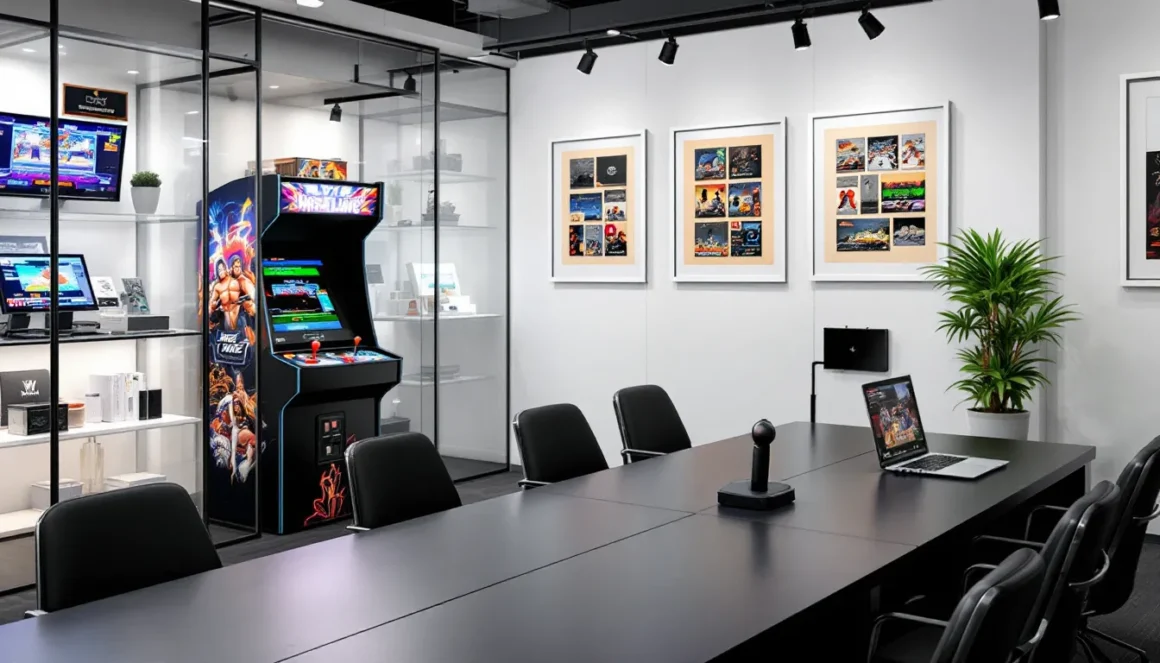
Remember when arcades weren’t dominated by fighting games and light gun shooters? There was a golden window in the late ’80s and early ’90s when wrestling arcade games ruled the cabinets, letting players execute suplexes and piledrivers with the mash of a button. These weren’t simulation experiences, they were pure spectacle, distilled wrestling chaos where four players could brawl simultaneously while cabinet speakers blared digitized crowd noise.
Wrestling arcade games occupy a weird, beloved space in gaming history. They arrived right as the WWF and territorial wrestling promotions were hitting mainstream cultural consciousness, and they disappeared just as quickly when arcade economics shifted. But for anyone who pumped quarters into WWF WrestleFest or Saturday Night Slam Masters, these games weren’t just time-killers. They were legitimate competitive experiences that demanded timing, matchup knowledge, and the kind of trash talk that only comes from standing shoulder-to-shoulder with your opponent.
Key Takeaways
- Wrestling arcade games dominated cabinets in the late ’80s and early ’90s, offering accessible yet competitive multiplayer experiences with four-player support and spectacle-driven gameplay.
- WWF WrestleFest and Saturday Night Slam Masters represent the pinnacle of wrestling arcade game design, with WrestleFest’s Royal Rumble mode and Slam Masters’ technical depth showcasing different approaches to grapple-based combat.
- Grapple timing and reversals form the core strategic layer of wrestling arcade games, rewarding player knowledge and execution over reflexes, similar to rock-paper-scissors with skill windows.
- These games disappeared from arcades by the mid-’90s due to declining arcade economics, increased licensing costs, and superior home console alternatives rather than design limitations.
- Modern access to wrestling arcade games is possible through MAME emulation, official re-releases like Capcom Arcade Stadium, or building custom arcade setups with conversion cabinets and modern components.
- The design principles from classic wrestling arcade games—accessible controls, grapple-based systems, and spectacle-driven presentation—continue to influence modern wrestling game franchises including WWE 2K and WWE All Stars.
The Golden Age of Wrestling Arcade Games
The late ’80s through the mid-’90s produced the definitive wrestling arcade catalog. This wasn’t a massive genre, maybe a dozen truly notable releases, but what emerged during this period set the template for everything that followed.
WWF WrestleFest: The Undisputed Champion
Released by Technōs Japan in 1991, WWF WrestleFest remains the gold standard. This was the sequel to WWF SuperStars, and it improved on its predecessor in every measurable way. The roster featured ten wrestlers including Hulk Hogan, Ultimate Warrior, Big Boss Man, and the Legion of Doom, all rendered in chunky, colorful sprites that captured their larger-than-life personas.
WrestleFest introduced two game modes: Royal Rumble (a battle royale elimination match) and Saturday Night’s Main Event (tag team tournament). The Royal Rumble mode was the real innovation, six wrestlers in the ring simultaneously, all trying to throw each other over the top rope. Chaos doesn’t begin to describe it when four humans were controlling different characters.
The game ran on modified Double Dragon hardware, which meant smooth sprite scaling and minimal slowdown even with six characters onscreen. Move variety was solid for the era: grapples, strikes, running attacks, turnbuckle moves, and each wrestler’s signature finisher. Timing mattered, button-mashing got you countered fast.
WWF SuperStars: Where It All Began
Technōs Japan’s WWF SuperStars (1989) laid the foundation. It featured six wrestlers: Hulk Hogan, Randy Savage, Ultimate Warrior, Big Boss Man, Honky Tonk Man, and Hacksaw Jim Duggan. The game was strictly tag team, you picked two wrestlers and fought through a tournament ladder.
SuperStars established the grapple-based control scheme that wrestling games would use for years. When two characters locked up, you had a split-second to input your move command. Faster inputs beat slower ones. It was rock-paper-scissors with timing windows, and it worked.
The game’s sprite work was impressive for 1989, with recognizable character models and decent animation. More importantly, it nailed the pacing, matches felt like wrestling spectacles rather than standard brawlers. Crowd noise dynamically shifted based on match momentum, a small touch that sold the arcade atmosphere.
Saturday Night Slam Masters: Capcom’s Technical Masterpiece
Capcom entered the ring in 1993 with Saturday Night Slam Masters (known as Muscle Bomber in Japan), and they brought their fighting game pedigree with them. This wasn’t a licensed product, Capcom created original wrestlers including Biff Slamkovich, Titanic Tim, and the Great Oni, but the gameplay depth exceeded anything the WWF games offered.
Slam Masters featured actual frame data and combo systems. Grapples had multiple tiers, counters had their own counter-windows, and advanced players could execute chain grapples by reading opponent inputs. The game supported four-player matches with various rule sets: singles, tag team, elimination, and a battle royale mode called Death Match.
Capcom’s art direction gave each character distinct personality through animation alone. The game ran on CPS-1 hardware, delivering the smooth 60fps gameplay the company was known for. Move lists were extensive, each wrestler had 15+ unique moves, multiple throws, aerial attacks, and stamina-based super moves.
The competitive scene around Slam Masters was small but dedicated. High-level play involved memorizing frame advantages, spacing for optimal grapple range, and baiting reversals. It remains one of the more technical offerings from the arcade wrestling catalog.
What Makes Wrestling Arcade Games Special
Wrestling arcade games occupied a design space somewhere between traditional fighters and beat-’em-ups. They didn’t fit cleanly into either category, and that hybrid approach gave them unique appeal.
Simplified Controls for Maximum Impact
Most wrestling arcade games used two or three buttons: strike, grapple, and sometimes run/block. WWF WrestleFest used two buttons plus an eight-way joystick. Slam Masters added a third button for pinning and submissions. This simplicity lowered the execution barrier compared to Street Fighter II or Mortal Kombat, which were dominating arcades at the same time.
But simple didn’t mean shallow. Grapple timing created natural mind games. When two characters locked up, both players had roughly one second to input their move command. If both input simultaneously, the stronger character usually won, but a well-timed late input could catch opponents off-guard. Reversals added another layer, giving players defensive options if they could read incoming moves.
The control scheme made wrestling games immediately accessible to casual players while maintaining enough depth for competitive play. You could teach someone the basics in thirty seconds, but mastering the timing windows and matchup-specific punishes took hours.
Over-the-Top Action and Spectacle
Wrestling arcade games embraced absurdity. Wrestlers launched each other fifteen feet in the air. Signature moves triggered elaborate animation sequences with screen flashes and impact effects. Slam Masters featured a move where Titanic Tim would lift opponents overhead and slam them so hard the screen shook.
This exaggeration served the arcade environment perfectly. These games needed to grab attention from across the room, competing with flashy fighters and rail shooters for quarters. Spectacle sold itself, watching a four-player Royal Rumble match with bodies flying everywhere was enough to pull people to the cabinet.
Audio design amplified the chaos. Digitized crowd noise, exaggerated impact sounds, and occasional wrestler voice samples created an atmosphere that felt distinctly wrestling-like even though the technical limitations. WrestleFest in particular nailed the presentation, with crowd volume that dynamically shifted based on who was winning.
Multiplayer Mayhem and Tag Team Action
Four-player support defined the best wrestling arcade games. WrestleFest and Slam Masters both allowed four humans to play simultaneously, either as teams in tag matches or as competitors in battle royale modes. This was relatively rare in early ’90s arcades, most games topped out at two players.
Tag team mechanics added strategic depth. Players could tag in fresh partners, execute double-team moves, and interfere when the referee wasn’t looking (yes, ref AI existed). Coordination mattered in competitive play, teams that communicated and timed their tags effectively had significant advantages.
The social element can’t be overstated. These games were designed for groups of friends competing together, talking trash while standing around the cabinet. The four-player setup turned every match into a mini-event, which is exactly what arcade operators wanted, more players meant more quarters.
Hidden Gems and Lesser-Known Titles
Beyond the major releases, several obscure wrestling arcade games deserve recognition. Some never left Japan, others had extremely limited distribution, and a few simply got overshadowed by bigger names.
Muscle Bomber Duo: The Japanese Alternative
Capcom released Muscle Bomber Duo (known as Slam Masters II outside Japan) in 1994 as a direct sequel. The roster shrank to eight wrestlers, but gameplay became significantly more refined. Capcom added super meters, enhanced the combo system, and tightened hit boxes for more consistent interactions.
Duo leaned harder into traditional fighting game mechanics. Characters had charge moves, command inputs for special throws, and EX moves that consumed super meter. The game played faster than its predecessor, with shorter match times and more emphasis on offensive pressure. Some wrestling game purists felt it strayed too far from the grappling focus, but as a competitive arcade game, Duo held up better than the original.
The game never received wide distribution outside Japan, which limited its cultural impact. But in regions where it appeared, Duo developed a small but dedicated competitive scene. Frame data enthusiasts loved it, there was genuine tech to explore, including option selects, throw invincibility timing, and meter management strategies.
Power Athlete and Other Obscure Classics
Power Athlete (1992) from Kaneko barely registered in Western markets, but it offered unique mechanics worth exploring. The game featured stamina management, wrestlers tired as matches progressed, affecting move speed and damage output. This created pacing that felt surprisingly authentic compared to most arcade wrestling games.
Kaneko’s sprite work was crude compared to Capcom’s polish, but Power Athlete had mechanical depth. Stamina recovery required strategic use of rest holds and corner breaks. Players could target specific body parts to amplify damage from certain moves. The learning curve was steep, which probably contributed to its commercial failure, but dedicated players found a surprisingly nuanced system underneath the rough presentation.
Other notable obscures include Mat Mania (1985), one of the earliest wrestling arcade games: The Main Event (1988), which featured analog controls for grappling: and Mania Challenge (1986), which added tag team mechanics to the Mat Mania formula. These earlier titles lack the polish of ’90s releases, but they established fundamental concepts that later games refined.
How to Play Wrestling Arcade Games Today
Tracking down original arcade hardware gets progressively harder, but multiple options exist for experiencing these games in 2026.
Emulation Options and Legal Considerations
MAME (Multiple Arcade Machine Emulator) runs most wrestling arcade games flawlessly on modern hardware. WWF WrestleFest, SuperStars, Slam Masters, and dozens of obscure titles work perfectly with current MAME builds. Performance isn’t an issue, even basic laptops can handle these games at native resolution and frame rate.
Legal status remains murky. Downloading ROM files for games you don’t own occupies a gray area that varies by jurisdiction. Some jurisdictions consider it copyright infringement regardless of the game’s commercial availability: others have more permissive interpretations for abandoned software. The safest legal approach involves dumping ROMs from arcade boards you actually own, though few people pursue this option.
MAME setup is straightforward. Download the emulator, acquire ROM files (through whatever means you deem appropriate), configure your controller, and launch. Most wrestling games work with standard gamepad layouts, though authentic arcade stick setups provide the intended experience.
Modern Re-Releases and Compilations
Official re-releases exist for a handful of titles. WWF WrestleFest appeared on iOS and Android in 2012 (though it’s been delisted), and Saturday Night Slam Masters was included in Capcom Arcade Stadium (2021) for PS4, Xbox One, Nintendo Switch, and PC. The Capcom release offers online multiplayer, save states, and various display options including scanline filters and aspect ratio settings.
The licensing situation kills most potential re-releases. WWF/WWE-licensed games face complex rights negotiations involving both the wrestling organization and the original publisher. Technōs Japan’s bankruptcy in 1996 further complicated matters for the WrestleFest legacy.
Capcom’s ownership of Slam Masters gives that game the best re-release prospects. It’s appeared in multiple compilations over the years, and Capcom has shown willingness to mine their arcade back catalog. But other wrestling arcade games remain trapped in licensing hell with no clear path to commercial availability.
Finding Original Arcade Cabinets
Original WrestleFest cabinets command premium prices in the collector market, $1,500 to $3,000 depending on condition. Slam Masters cabinets run slightly cheaper, typically $800 to $2,000. These prices reflect scarcity more than desirability: production numbers were relatively low compared to fighting game juggernauts.
Cabinet condition varies wildly. CRT monitors may need service or replacement. Control panels suffer wear from decades of use. PCB boards can fail, though MAME-based board replacements exist for most games. When considering cabinet purchases for home setups, factor in restoration costs beyond the initial price.
Conversion cabinets offer a middle ground. Generic fighting game cabinets can be converted to run wrestling games using original PCBs or MAME boards. This approach costs less than buying dedicated cabinets while preserving the arcade experience. Control panel layouts need adaptation, most wrestling games used simpler button configurations than six-button fighters.
Tips and Strategies for Dominating the Ring
Wrestling arcade games reward system knowledge and execution over reflexes. Here’s how to actually win once you’ve moved past button-mashing.
Mastering Grapple Timing and Reversals
Grapple exchanges form the core of wrestling game strategy. In WrestleFest and SuperStars, grapple outcomes depend on timing and character strength. When initiating a grapple, you have roughly 15-20 frames (at 60fps) to input your move command. Inputting immediately gives you priority over delayed inputs, but leaves you vulnerable to reversals.
Reversals require reading opponent patterns. If someone consistently throws immediately after grapple initiation, delay your input by 5-10 frames to catch them. Most games give visual tells, character animations shift slightly based on whether they’re going for strikes, throws, or blocks.
Slam Masters uses a more complex system with three grapple tiers. Light grapples beat nothing, medium grapples beat light, heavy grapples beat medium. But heavier grapples have longer startup, creating rock-paper-scissors dynamics. Advanced play involves conditioning opponents to expect one grapple tier, then switching to counter their anticipated defense.
Practice mode doesn’t exist in arcade games, but single-player matches against AI serve the same purpose. Spend time identifying the timing windows for your main character’s moves. Learn which moves have invincibility frames, which can be canceled, and which leave you vulnerable on whiff.
Character Selection and Matchup Knowledge
Every wrestler has different stats: power, speed, stamina, and technique ratings. These aren’t decorative, they directly affect damage output, movement speed, and stamina drain. In WrestleFest, Hulk Hogan hits harder but moves slower than Ultimate Warrior. Big Boss Man has great grapple priority but limited aerial options.
Matchup knowledge determines higher-level play. Know which characters have grapple priority advantages. Understand effective counterpicks, speed characters can outmaneuver power characters by avoiding grapple exchanges entirely. Against human opponents, character choice becomes part of the psychological game.
Tag team composition matters equally. Pair complementary styles rather than duplicating strengths. A power character paired with a speed character covers more strategic options than two bruisers. Coordinate signatures and finishers, some tag teams can chain specials for devastating combo damage.
Tag Team Coordination Techniques
Effective tag team play requires constant communication and spacing awareness. The partner outside the ring can interfere during grapples, interrupt opponent moves, and execute double-team attacks. But mistimed interference causes disqualifications or backfires, hitting your own partner.
Smart teams control ring positioning. Keep opponents near your corner to enable quick tags and interference. When your active wrestler’s stamina drops, tag out immediately rather than risking a loss. The stamina recovery for inactive partners creates a resource management layer that separates casual teams from competitive ones.
Double-team moves deal massive damage but require setup. One player initiates a grapple while the partner enters the ring for the assist. Timing these setups against skilled opponents is difficult, they’ll try to interrupt or reverse before the second wrestler arrives. Feinting double-teams to bait reversals becomes part of advanced tag meta.
According to competitive communities documented at Shacknews, high-level Slam Masters tag teams developed elaborate strategies involving meter management, corner trap sequences, and throw-tech baiting. These techniques never reached mainstream knowledge because the arcade competitive scene dissolved before internet strategy guides became standard.
The Legacy and Influence on Modern Wrestling Games
Wrestling arcade games influenced console wrestling game design throughout the ’90s, but the genres eventually diverged.
From Arcade Simplicity to Console Complexity
Early console wrestling games directly adapted arcade mechanics. WWF Royal Rumble (1993, SNES/Genesis) borrowed heavily from WrestleFest’s control scheme and match types. Saturday Night Slam Masters received console ports for SNES and Genesis that preserved most of the arcade gameplay.
But console hardware enabled depth that arcade economics couldn’t support. Longer match times, career modes, wrestler creation tools, and expanded rosters became standard in console releases. By the time WWF SmackDown. (2000, PS1) arrived, wrestling games had evolved into complex simulation experiences that bore little resemblance to their arcade ancestors.
The arcade DNA persists in unexpected places. The grapple-based control schemes that WrestleFest popularized influenced wrestling game design through multiple console generations. Modern titles including the WWE 2K series still use grapple-timing systems as core mechanics. The arcade emphasis on spectacle over simulation continues in games like WWE All Stars (2011), which deliberately embraced exaggerated, arcade-style gameplay.
Indie developers occasionally revisit the arcade wrestling formula. RetroMania Wrestling (2021) explicitly aimed to recapture WrestleFest’s design philosophy with modern graphics and online play. Reception was mixed, nostalgia doesn’t always translate when players have access to deeper alternatives.
Why Wrestling Games Left Arcades Behind
The economics killed wrestling arcade games more than design limitations. Fighting games generated more revenue per square foot of arcade space. Street Fighter II and Mortal Kombat pulled in massive quarters throughout the early ’90s, and arcade operators allocated floor space accordingly.
Console hardware caught up quickly. By 1995, PlayStation and Saturn delivered graphics and gameplay depth that matched or exceeded arcade offerings. Players could get superior wrestling experiences at home for the cost of a single game rather than feeding quarters continuously. The value proposition shifted dramatically.
Licensing costs became prohibitive for arcade releases. WWE (formerly WWF) licensing fees increased as the organization grew through the late ’90s. Combined with declining arcade foot traffic and expensive cabinet production, the business case for wrestling arcade games evaporated. The last major release was WWF: The Arcade Game (1995, Midway), which was really a digitized Mortal Kombat clone wearing wrestling cosmetics.
No arcade wrestling games have been produced since the late ’90s. The genre exists entirely in console and PC space now, with occasional mobile releases. But for a brief window, these games delivered something unique, accessible, spectacle-driven multiplayer experiences that captured wrestling’s theatrical chaos.
Building Your Own Wrestling Arcade Setup at Home
Building a dedicated wrestling arcade setup at home requires some investment, but it’s achievable for enthusiasts willing to source components and handle basic assembly.
Arcade Cabinet Options and Recommendations
Three main approaches exist for home wrestling arcade setups:
Original cabinets provide authenticity but require the most investment. Expect to spend $1,000-$3,000 for a functional WrestleFest or Slam Masters cabinet, plus potential restoration costs. Storage and transportation present challenges, full-size cabinets weigh 200-300 pounds and require truck transport.
Conversion cabinets offer flexibility at lower cost. Generic four-player cabinets (often converted from TMNT or Simpsons machines) work perfectly for wrestling games. Add a MAME board, configure the control panel for wrestling game button layouts, and you’ve got a versatile setup that can run any arcade wrestling title. Total cost typically runs $800-$1,500 depending on cabinet condition and board choice.
Bartop cabinets provide the arcade experience in a compact form factor. These sit on desks or tables rather than standing freely. Building or buying a bartop specifically for DIY wrestling arcade setups costs $300-$600 depending on component quality. The trade-off is smaller screens (typically 17-19 inches versus 25+ for full cabinets) and less imposing physical presence.
Screen choice matters significantly. CRT monitors deliver authentic visual presentation including natural scanlines, but they’re heavy, bulky, and increasingly difficult to service. LCD replacements simplify setup and maintenance while supporting modern resolutions. Most enthusiasts use 27-inch or larger LCD monitors with aspect ratio settings to match original arcade displays.
Controller and Fight Stick Configurations
Authentic wrestling arcade control panels used simple layouts: one joystick and two or three buttons per player. Replicating this is straightforward with modern components.
Sanwa or Seimitsu joysticks provide arcade-quality feel with modern reliability. Ball-top or bat-top comes down to preference, wrestling games don’t require the precision that fighting games demand, so either works. Sanwa OBSF-30 buttons are the community standard for arcade builds, offering consistent tactile feedback and long lifespan.
Button layout for four-player wrestling games requires careful planning. Cabinets need enough space to accommodate four players comfortably without elbow collisions. Standard fighting game layouts (six buttons per player in two rows) waste space for wrestling games that only need two or three buttons. Linear button arrangements work better, with joysticks positioned to give each player adequate room.
Wiring varies by board choice. MAME boards using USB encoders simplify the process, each joystick and button set connects via USB, and configuration happens in software. Original arcade PCBs require JAMMA harness wiring, which involves more technical knowledge but delivers authentic performance characteristics.
For players without space or budget for full cabinet builds, quality fight sticks offer an alternative. Most modern fight sticks designed for console fighters work perfectly with MAME setups. Brook boards provide compatibility across multiple platforms, enabling the same controller to work with arcade emulation, console ports, and PC releases.
Some enthusiasts go further, building custom four-player control panels that connect to PCs or consoles. These flat control surfaces use arcade components wired to USB encoders, providing authentic arcade controls without requiring full cabinet commitment. Total cost runs $200-$400 depending on component quality and whether you build or buy pre-assembled.
Conclusion
Wrestling arcade games burned bright and fast. Their commercial window lasted maybe seven years, from WWF SuperStars in 1989 to the genre’s effective death in the mid-’90s. But within that narrow timeframe, developers created genuinely innovative games that found unique design space between fighters and brawlers.
What makes these games worth revisiting isn’t just nostalgia. The core mechanics hold up. Grapple timing creates legitimate mind games. Four-player matches deliver chaotic multiplayer experiences that few modern games replicate. And the spectacle, the exaggerated moves, the crowd noise, the screen-shaking slams, still entertains decades later.
The genre won’t return. Arcade economics have shifted too dramatically, and wrestling games have evolved in directions that work better for home play. But the classics remain accessible through emulation, occasional re-releases, and the dedicated collector community. For anyone who wants to understand where wrestling game design came from, or who just wants to experience some of the best multiplayer chaos the arcade era produced, these games are still worth your time, and your quarters, metaphorical or otherwise.